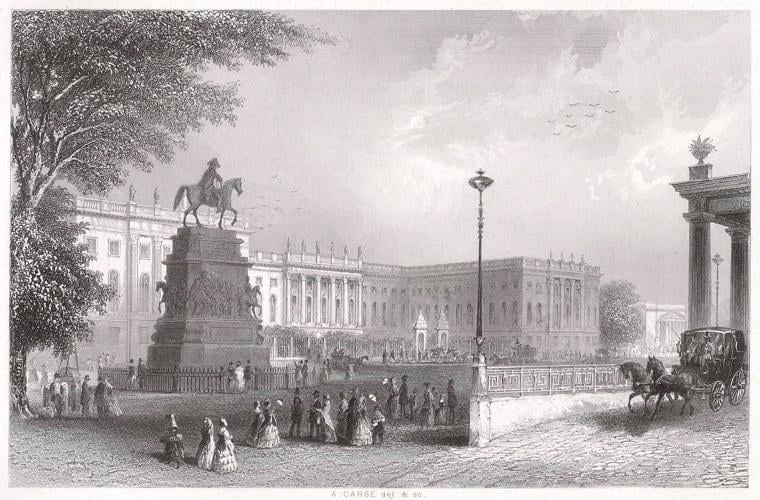

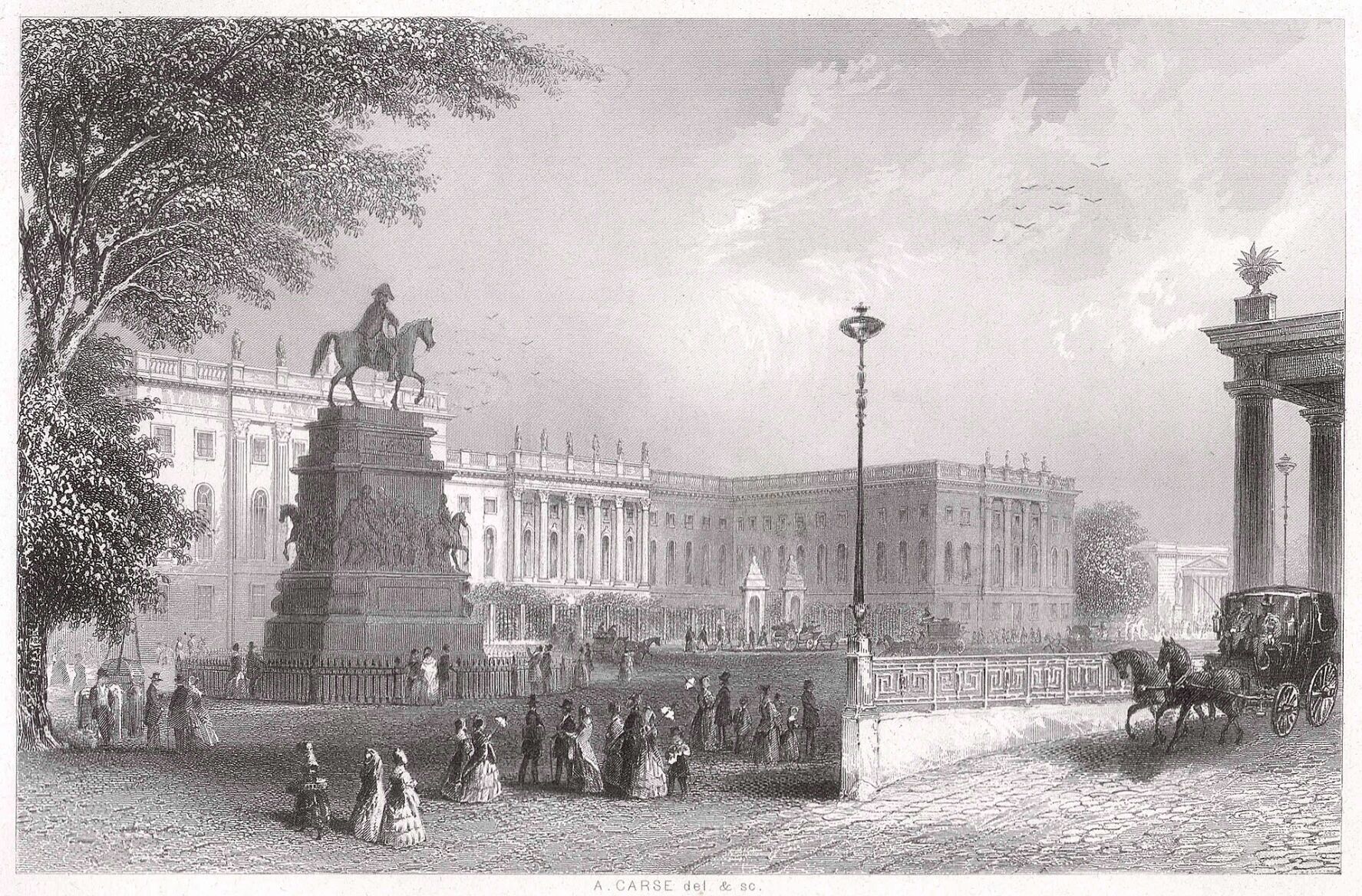
The founding of the University of Berlin launched the model for modern secular research universities.
In recent months, “academic freedom” has been all over the news. A professor at Texas A&M University was asked to remove a text by Plato from his syllabus amidst a general tightening of restrictions on classroom discussions about race and gender. Another instructor was fired after a student objected to the presentation of material on gender in a “Literature for Children” class. Recent pro-Palestinian protests at many U.S. universities have raised the question of the limit of what professors can and should utter in the classroom and in public about hot-button contemporary issues.
What is “academic freedom” and is it worth keeping? Amidst all this controversy, there is little agreement about what the concept means, let alone whether it is of value. Many observers point out that academic freedom is distinct from general free speech protections under the First Amendment. The First Amendment protects all citizens from government restrictions on free speech, so it is particularly relevant at public universities. Academic freedom, by contrast, is a right specific to faculty (and students) at universities to pursue truth wherever it leads and thereby serve the distinctive mission of a university. Beyond this basic distinction, however, it is difficult to find common ground today.
People are also reading…
My research is in the history of political thought, so I study influential thinkers such as Plato, Aristotle, Machiavelli, Marx and others whose work has fundamentally shaped how we understand government and society. In my recent work, I have been examining the origins of the idea of academic freedom in early 19th-century German political thinkers. By returning to the origins of this idea, I hope we can gain a deeper understanding of the concept that might begin to bridge the divide in our contemporary disputes.
As an institution, the history of the university stretches far back into the Middle Ages and was largely dominated by religious authorities and served religious purposes. Most scholars locate the origin of the modern secular research university to the 19th century in Germany, specifically with the founding of the University of Berlin. The founding father of the university, Wilhelm von Humboldt, conceived of its purpose as the comprehensive education of students in a well-rounded way, or what thinkers at this time referred to as “Bildung.” Humboldt commissioned other major philosophical minds at the time to weigh in on the purpose of the university and the value of academic freedom in serving that purpose. Thinkers such as J.G. Fichte and Friedrich Schleiermacher saw in the university the vehicle for the enlightenment of human beings, an escape from the dominance of religious and aristocratic authorities, and an installation of scientific reasoning as the sole guide for human beings.
The German philosophers made the case for academic freedom as a necessary condition for the University of Berlin. They understood academic freedom to be the right of the scholarly community to jointly pursue truth and advance knowledge unimpeded by the powerful forces of the day, whether religious, political or economic. However, these thinkers were well aware that this new form of scientific thinking was not always popular. For this reason, they emphasized academic responsibility alongside academic freedom. In their view, scholars had the responsibility to advise society’s leaders on ways that would advance the common good of the entire community. The vocation of the professor in Berlin was not simply to retreat into dusty old books, but to use their knowledge to improve the outlook for Prussia. The Prussian government, then, saw more value in the university than they otherwise would, as it held out the promise of increasing its prestige and power at the very time when its independence was challenged under Napoleon. Religious figures and moneyed elites, too, saw in the university the possibility that its commitment to reason and truth would produce graduates who would help them.
Of course, these philosophers recognized that reason and truth may sometimes clash with the interests of government, religion and money. But often enough, they held, academic responsibility and the broader powers in society could align, ensuring academic freedom.
The philosophy behind, and model of, the German university was imported into the United States in the 19th century, in thinkers such as John Dewey and in universities such as Johns Hopkins. At some point along the way, however, the German origins of the university receded from view, and with it some of this careful consideration about the nature and purpose of the university and the role and responsibilities of the scholar within it. In my view, our contemporary discussions could be enriched by a fuller understanding of the historical roots of academic freedom.
—

About the Researcher
Jeffrey Church is a professor of political theory at the University of Wisconsin–Madison. His research is on the history of political thought, particularly German political theory from Immanuel Kant through Friedrich Nietzsche. He examines themes of individuality, the good life, education and morality as they relate to the modern liberal political order.