

One of Lyn Van Swol’s research projects investigated bias when talking to Badgers and Packers fans.
When Green Bay played the Bears in the playoffs, were you rooting for the Packers so much that you were certain they would win? This tendency to believe our favorite teams and groups are more likely to win is called “wishful thinking bias.” While it’s fun to anticipate a win, this bias can cloud our judgment and make us dismiss valuable advice from people who don’t share our loyalties. Yet my research suggests that listening to the “other side” is exactly what we need to do to make better decisions.
I study advice communication and persuasion at the University of Wisconsin–Madison. Generally, people benefit from taking advice, but they are often reluctant to do so, especially from those they view as rivals. To test this, I conducted a study in which Packers fans talked face-to-face about an upcoming game with either a fellow fan or a fan of an opposing team (in this case, Vikings or Bears fans). We also ran a similar study during the Big Ten football season, in which Badgers fans received written forecasts and advice about the game either from fellow Badgers fans or fans from the opposing Big Ten team. In both cases, we asked them to forecast the game’s final score.
People are also reading…
We found that interacting with an outgroup rival significantly reduced wishful thinking and increased the accuracy of the forecasts. While a fellow fan might just reinforce your hope for a blowout, a rival forces you to consider risks and factors you might have ignored. Because the opponent has their own opposite bias, their advice often brackets the truth, which usually lies somewhere in the middle. By seeking advice from the people we disagree with most, we can identify our own blind spots and find a more balanced path forward.
While football scores are a fun way to measure bias, the stakes of how we process advice are much higher when it comes to our health and environment. I apply these same principles of persuasion to help Wisconsin residents understand messages about “forever chemicals” (PFAS) in their drinking water and protect our natural resources.
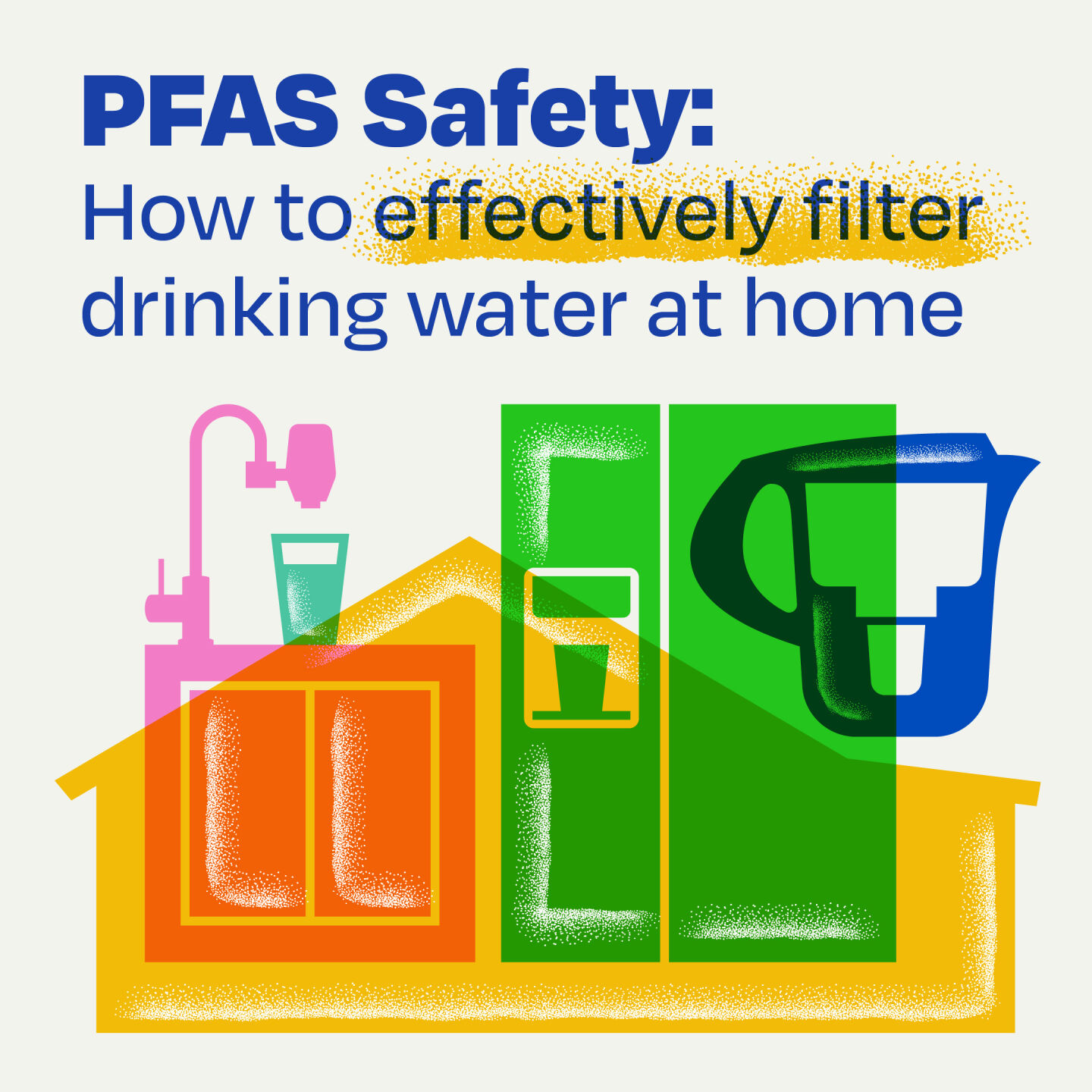
This PFAS health message highlights high-efficacy solutions.
In our PFAS research, we found that people aren’t just looking for definitions; they want solutions. Using search analysis tools, we discovered that people search for “how to remove PFAS” much more frequently than “what is PFAS.” Our surveys showed that messages highlighting high-efficacy solutions — such as using specific water pitcher filters — significantly increased people’s intention to take action. People want actionable advice, rather than explanations.
However, the way we deliver this advice must be tailored to the audience. In a study of municipal water users in Wisconsin, we oversampled Latino residents and found they perceived PFAS as a significantly higher risk than non-Latino residents. When we tested these messages on social media, we found a fascinating split: while English-language posts about “how-to” solutions (efficacy) got the most clicks, our Spanish-language posts were most successful when they highlighted the “risk” (threat) of the chemicals. This suggests that for some communities, highlighting the seriousness of the threat is the most effective way to increase interest in the message.
We see similar patterns in other contexts, such as protecting our waterways from invasive species. When presenting messages to trout anglers about cleaning their gear to stop the spread of New Zealand mud snails, we found that scaring them with the consequences was often not effective. Instead, providing clear, manageable steps — increasing their self-efficacy — was far more effective. Likewise, when encouraging landowners to plant trees, we found that beginners responded best to narratives (stories about their neighbors), while experienced landowners just wanted effective next steps, like the technical facts about tax abatement programs.
My research doesn’t stay in a lab; it directly informs my teaching. I lead a course at UW–Madison called “Persuasion and Social Influence,” where students develop their own communication campaigns to reduce PFAS exposure. By applying these real-world theories, they learn how to translate complex science into messages that truly help their neighbors.
To ensure this work has an impact beyond campus, my team has held workshops with state foresters, Menominee Nation tribal leaders and the Department of Natural Resources. By understanding the psychology of advice and persuasion, we can provide public communicators with the tools they need to give advice that sticks, ultimately protecting the environment and the health of everyone in Wisconsin.
—

About the Researcher
Lyn Van Swol is a professor of communication science at UW–Madison and the associate chair for the Department of Communication Arts. Her research focuses on the theme of examining what factors are likely to increase acceptance of information during an interaction.