


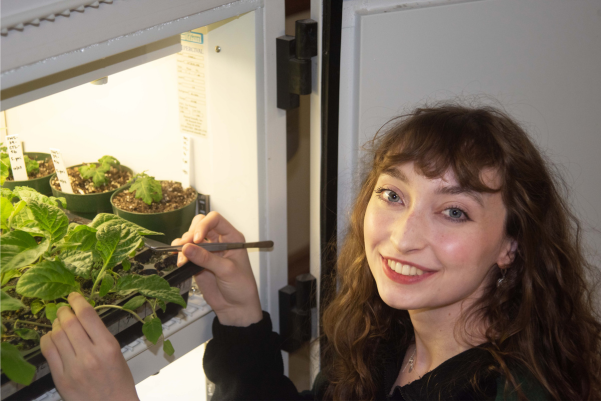
Kaylin DeHart does botanical research in James Satterlee’s lab.
Kaylin DeHart didn’t tour UW–Madison before enrolling. She knew she wanted to go to the flagship university in her home state, and the institution’s reputation for research spoke for itself. So, when she first stepped onto campus for freshman orientation, she was on a mission: DeHart wanted to join a research lab first thing. She started by reaching out to Mary Halloran, professor and chair of the Department of Integrative Biology, who launched her undergraduate research career by involving her in a study on the neurobiology of fish. Now a graduating senior majoring in neurobiology and botany, DeHart has worked in research labs for two departments that are combining forces to form the new Department of Biology. Her work is a model for why studying across disciplines can build a broader understanding of the science of life.
Why did you choose to double major in neurobiology and botany?
People are also reading…
I started with neurobiology, because it gave me so many options. After graduating, I can go to medical school, I can go into academic research, I can go into corporate science or any number of things that keep me on a path that interests me. I added botany after taking a plant class on a whim, and I really enjoyed it and wanted to see it through. I knew it would be a commitment to add a second major, but the whole field of biology cracks open when you add in plants, which creates a whole ecosystem you can dip your fingers in for career choices.
What was your first research experience on campus?
In Mary Halloran’s lab, I’ve been working with zebrafish. I started by just helping with feeding them — and I still feed them — but eventually I started lab research focused on understanding kinesin light chain mutations through reverse genetics. I would perform polymerase chain reaction (PCR) tests and analyze the visible phenotypic differences in the neural branching of mutated zebrafish embryos. The lab focuses on understanding the basis behind neuronal branching through zebrafish models to provide insight on human disease and developing nervous systems.
And what was your botany research lab about?
I am currently conducting research in Jack Satterlee’s lab counting plant stomata on the leaves of tomatoes and other solanums to understand a plant’s gas exchange efficiency when grown in different environments. His lab is interested in the genetic and molecular basis of prickles on solanum plants. This research matters particularly to agricultural communities in Wisconsin and around the globe. We want to develop knowledge on how plants change based on the environment that they’re in.
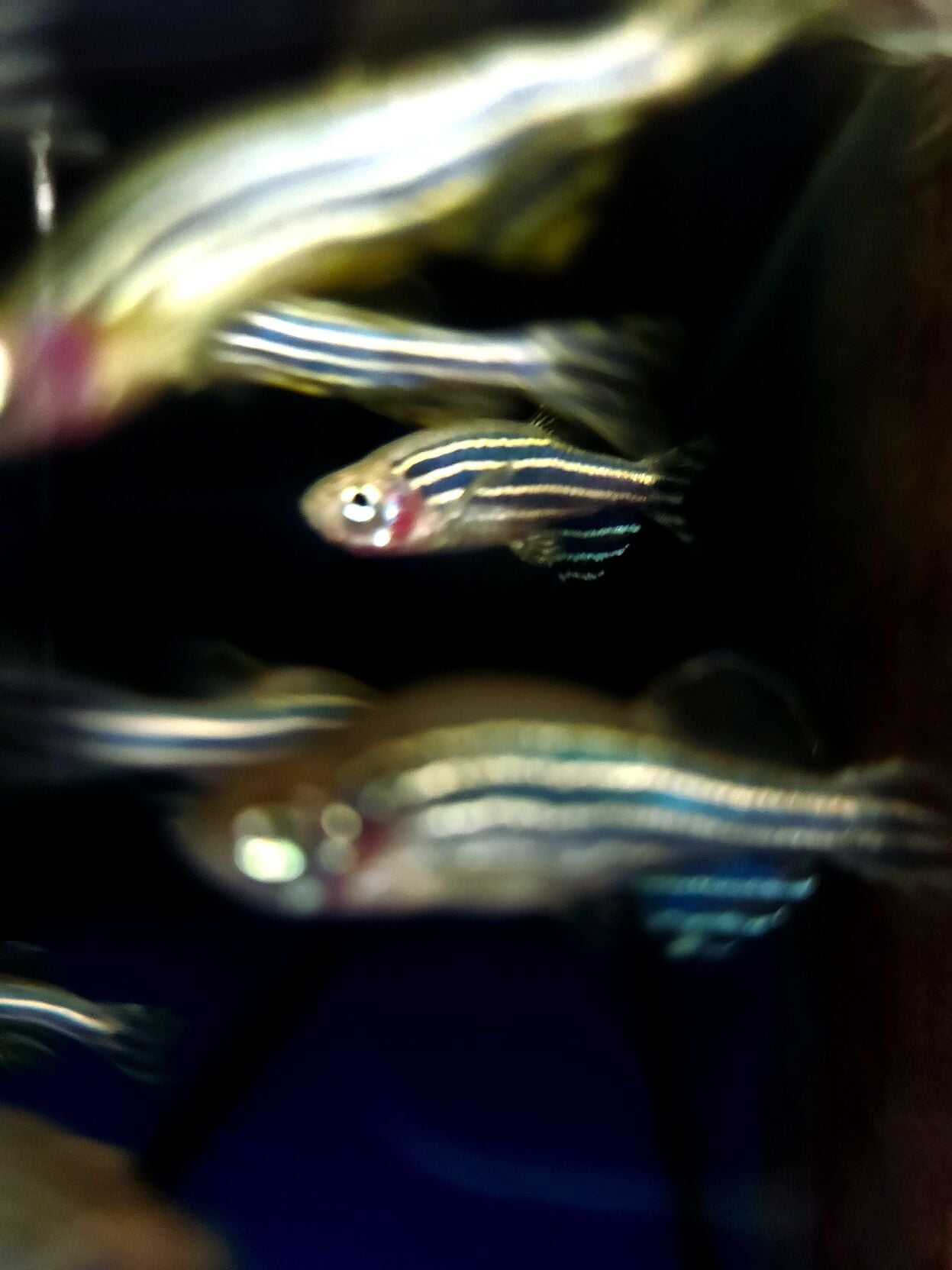
Kaylin DeHart has been feeding the zebrafish in Mary Halloran’s lab since her freshman year.
Why was it valuable to study two different disciplines of the biological sciences?
I enjoy the intersection of this work. I have the opportunity to look at two sides of biology because of my experiences working in different labs and with different mentors. The cool part is I can see the connections between them both. And that’s what I have really enjoyed about college, seeing all of my science classes come together and start merging.
How has doing undergraduate research impacted your college experience?
This experience has really helped my confidence, because it was humbling to be thrown into an environment where you have no idea what’s happening. But I think the undergraduate research experience is representative of what research is as a whole, because you’re throwing yourself into the unknown and discovering things about yourself and the world around you. As a scientist, you can’t be afraid of the unknown, because that really hampers your ability to discover anything. You have to make mistakes to learn something and make discoveries that are new and novel. It’s pretty cool that the university focuses so much on getting undergraduate students research experience, because it sets us up to be prepared for whatever comes next.
—
About the Researcher
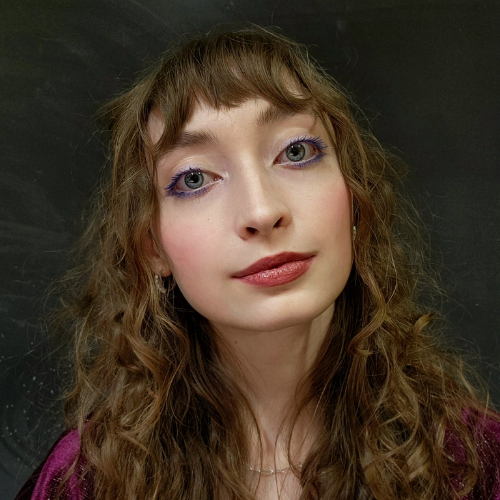
Kaylin DeHart is a senior at the University of Wisconsin–Madison majoring in neurobiology and botany in the College of Letters & Science while also pursuing a certificate in leadership. In addition to research and classes, DeHart has participated in an entomology club, the Student Leadership Program team and classical vocal lessons. She also has an on-campus internship at the Wisconsin Union.


