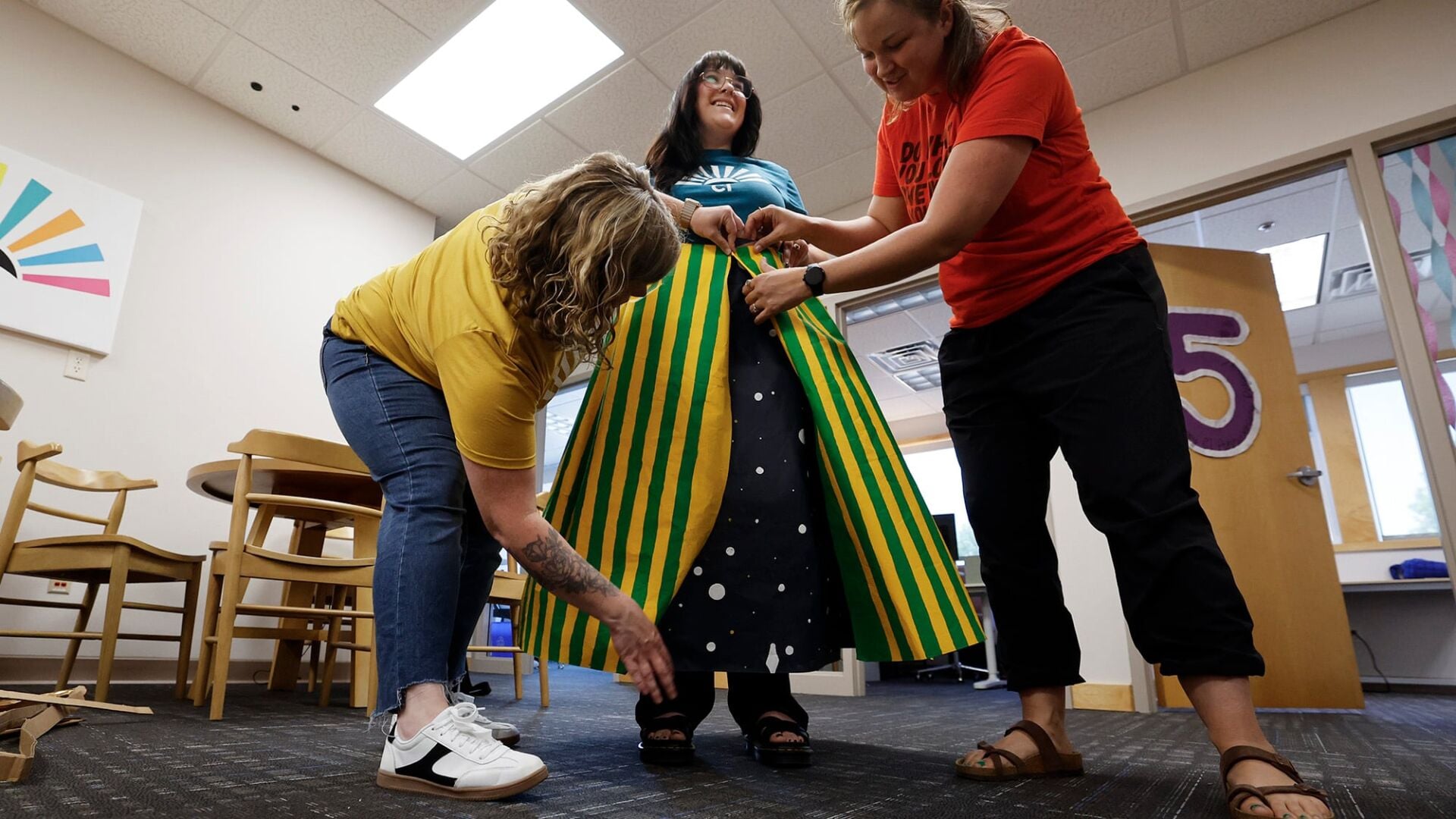

The Play Make Learn Conference is a place for collaboration and discovery in the design, research, and practice of playful learning, games for learning and positive social impact, making and makerspaces, STEAM education, and arts in education. PML creates an inspirational space for preK-12 educators, designers, developers, innovators, librarians, museum professionals, makers, and researchers to tinker together, share knowledge, and celebrate one another’s work.
This year’s conference will take place July 9-10, 2026, in Madison.
Proposal submission
Call for proposals deadline for submissions: March 9, 2026, at 11:59 p.m. Central.
Notifications will be sent out in April 2026.
People are also reading…
PML believes that everyone has unique contributions to bring to the conference and aspires to foster a learning community that has a diversity of perspectives and practices. First-time presenters, young people, or practitioners who are considering submitting for Play Make Learn and need additional support can reach out to the planning team at conferences@education.wisc.edu.
2026 conference theme: Scrappiness
Setting out to create something involves both big dreams and many obstacles. People quickly run into time constraints, limited materials, difficulties getting access, administrative rules, and the inertia of how things have always been done. They struggle against that resistance and fight to get in and get on with it. They are scrappy. They pull from the bottom of their own buckets of energy. They are outsiders, leftovers, left outs. They are educators who deserve more but have to make do. They are makers who want to do it themselves with the materials at hand. They are inventors who cobble together rules to turn their surroundings into a game.
“Scrappiness” means using whatever is around us — the trash, the leftovers, the scraps. People cut out construction paper and leave tiny bits and pieces. They make a meal and compost the scraps of eggshell and orange peel. Those leftovers are opportunities to make something once again, to play, and to learn. A cardboard box becomes a make-believe rocket ship. The compost becomes the soil for a community garden. People make beautiful art, experiences, and community from the scraps.
This year, Play Make Learn invites talks and workshops that engage with the attitude of scrappiness, with projects that get scrapped, and with literal scraps. Potential topics include, but are not limited to:
- Scrappy educator mindset, passion, and burnout
- New approaches to failure in play and education
- Quilting, scrapbooking, and other feminized arts of collage
- Recycling, composting, and other ecological approaches to waste
- Using and contributing to open access resources
- Failed community projects and what it means to end them
- Cardboard
- Junk, treasure, and other things that have lost their use
- The institutional consequences of making ends meet
- Media in fragments (Tweets, Wikis, TikTok)
- Little free libraries, tool exchanges, and other community sharing
- Rethinking tinkering and hacking today
- The lost-and-found, scrapyards, scrap bins, and other dislocations
- Archiving and preserving the remnants
- Game jams and other art projects that don’t go anywhere
Session information
Session strands: Submissions are encouraged in and across the following themes, but new ideas are also welcome and encouraged. Applicants will be asked to select all themes that apply to their work. Examples include:
- Playful learning
- Games for learning and positive social impact
- Making and makerspaces
- STEAM education
- Arts in education
Session formats: Applicants will be asked to select the session format. Note the time and maximum number of presenters for each type. Options include:
- Hands-on workshops (75 minutes, 1-6 presenters)
- Workshops should actively engage participants, showcasing work or methods used inside or outside the classroom. They may include physical making, playing a game, or other activities. Session organizers will be asked for two or three learning goals or takeaways they have for participants in the session.
- Organized panel presentation (75 minutes, 3-4 presentations)
- Panel presentations should have two or more presenters from different projects or organizations. Panels should explore a “big question” relevant to the conference theme or of interest to the larger PML community. Session organizers will be asked for two or three learning goals or takeaways they have for participants in the session, a short description of the full session, and descriptions of the three or four presentations that will make up the full session.
- Individual presentation (15 minutes, 1-2 presenters)
- Presentations will be 15 minutes in length to highlight noteworthy initiatives, ideas, or recent research. Session organizers will be asked for one learning goal or takeaway they have for participants from their presentation. The planning committee will group individual presentations into themed 75-minute sessions with a moderator, who will reach out to coordinate the final format with presenters.
- Poster
- Posters provide the opportunity to present innovative ideas, initiatives, and prototypes in both formal and informal learning contexts. Presenters will have space to hang their posters and engage with attendees during the interactive poster and playful demo session.
- Playful demo
- This interactive, open-ended session is a chance to show off or playtest a game, educational technology tool, or other innovation. Presenters will have a table for their activity or tool during the interactive poster and playful demo session.
- Break the mold session
- Ideas that do not fit into the formats listed above are welcome. Examples include sessions lasting days or weeks asynchronously, sessions within games, and similar experiments. For example, a session could take place in Minecraft, participants could meet outside to explore, or participants could work collaboratively over the conference to produce a play. Organizers are encouraged to be as creative as they dare for these sessions. Questions about an idea before submitting can be sent to conferences@education.wisc.edu.