


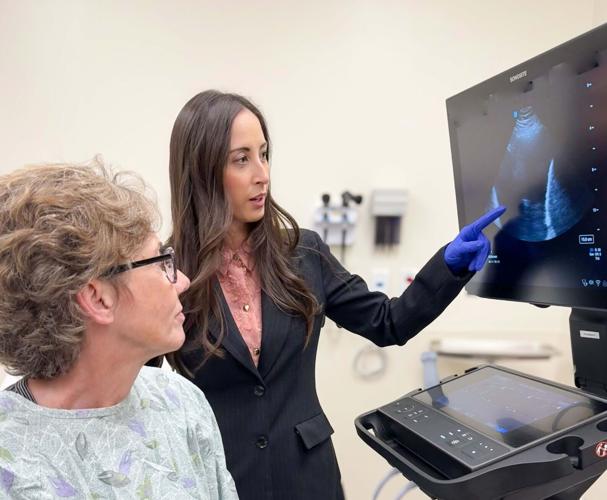
Lung cancer is the second most common cancer affecting men and women in the United States, and it is the leading cause of cancer deaths. Early detection and following recommended screenings are crucial to give patients more treatment options and improved survival.
UW Health’s pulmonary nodule team uses the latest screening techniques to find and diagnose lung cancer. They also offer many minimally invasive treatments for early-stage disease, including a team approach to both perform a biopsy and surgically remove confirmed lung cancer within one anesthetic procedure.
The team takes a thoughtful, personal approach to educating patients about potential risks factors for their lung health, and the best steps forward based on their unique needs.
“We know this can be a stressful and uncertain time for patients, and we want them to feel informed and supported throughout the decision-making process,” said Kimberly Sivertsen, NP.
People are also reading…
Lung cancer risks
A history of smoking or secondhand smoke exposure is the biggest contributor to a lung cancer diagnosis. Another notable risk factor is prolonged exposure to radon, a naturally occurring radioactive gas that occurs in the soil and can seep into home foundations. Other factors include environmental pollution, exposure to asbestos, and a family history.
Currently, the U.S. Preventive Services Task Force recommends regular screenings for adults age 50 to 80 who have smoked a pack of cigarettes a day for 20 or more years, or two packs a day for at least 10 years.
“You don’t need to quit smoking before getting screened,” Sivertsen said. “The goal is early detection and helping patients access the best treatment options. We do offer smoking cessation education and treatment in a supportive environment.”
Screening
Early-stage lung cancer typically does not cause symptoms, which is why preventive care and screenings are so important.
Preventive screenings can be done with a low-dose chest CT scan. During this screening, patients lie down and move through a wide donut-shaped scanner that takes images of the lungs while patients hold their breath. This noninvasive and painless scan only takes a couple of minutes.
Finding a nodule
UW Health’s pulmonology nodule team sees patients who have had a nodule, or small area of growth, show up in their lung scans. But the presence of a nodule does not need to cause alarm.
“I think the biggest misconception is that a nodule is always cancer,” said Tatyana Risch, NP. “It’s actually the opposite: most nodules aren’t cancer. But it’s important not to ignore them.”
Looking at the size, density and shape of the nodule, the team can discuss the risk of the nodule being a cancer and talk with patients about next steps. For patients with low risk factors, this can include a follow-up CT scan to see if the nodule has changed in size since the initial scan, and checking in with the patient regularly for surveillance.
Precision biopsy and treatment
If a nodule is suspicious, the team talks with patients about biopsy options.
UW Health’s interventional pulmonologists are skilled in bronchoscopy, where patients are put under anesthesia and a provider guides a small, flexible instrument through the mouth and into the lungs until it reaches the nodule to collect tissue. UW Health also offers robotic bronchoscopy, where a robotic system enhances the precision of a bronchoscopy to reach smaller, more distant airways.
UW Health has also launched a new specialized procedure that can both diagnose and remove cancerous tissue in the same anesthetic procedure. First, Dr. Amy Jaeger, an interventional pulmonologist and clinical assistant professor of medicine at UW School of Medicine and Public Health, performs a robotic bronchoscopy. A waiting pathologist can immediately test that collected tissue for cancer. Once the diagnosis is confirmed, cardiothoracic surgeon Dr. Andrea Axtell performs a minimally invasive surgery to remove it.
“So patients wake up diagnosed and treated all in the same procedure. That minimizes (treatment) delays and anxiety for patients. But if the biopsy comes back and it’s a benign lesion, then we stop and there’s no surgery, so it’s still a thoughtful approach and we’re not subjecting people to increased procedural burden or risks otherwise,” said Axtell, who is also a UW Health | Carbone Cancer Center researcher and assistant professor of surgery at UW School of Medicine and Public Health.


