


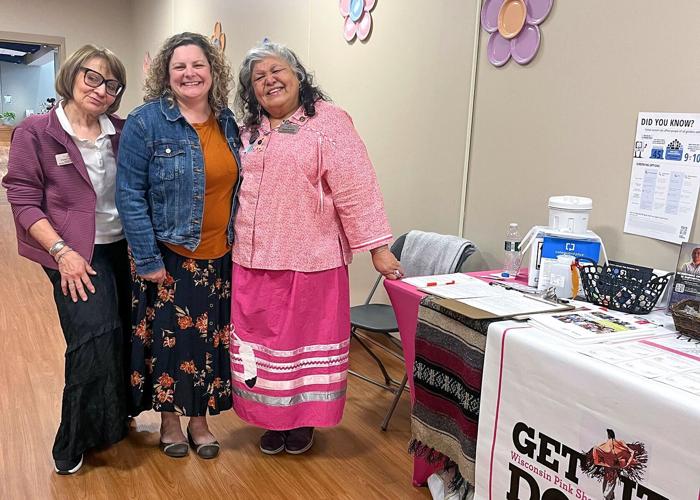
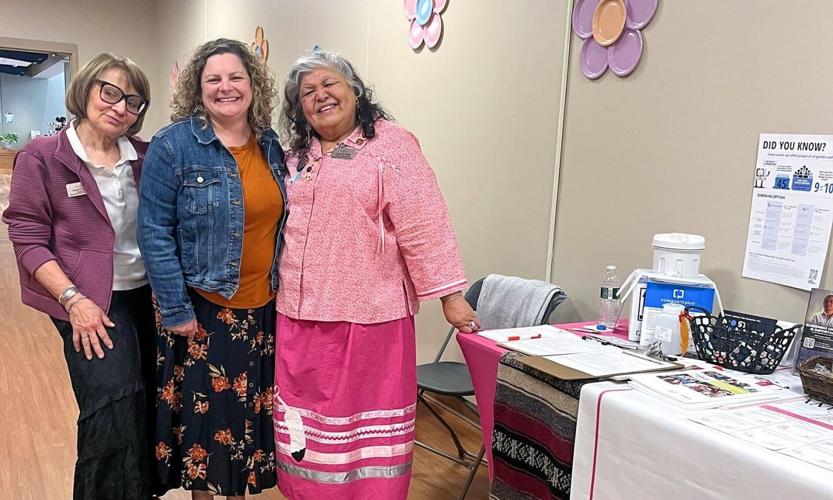
Today, the Wisconsin Inter-Tribal Pink Shawl Initiative has evolved into a statewide nonprofit that provides cancer prevention education and resources to all women who need them.
Carol Cameron, a founder and executive director of Pink Shawl Initiative, said their mission evolved to meet new community needs and forge new collaborations. In particular, they have expanded into Latina health outreach with bilingual outreach staff.
“So, the mission was Native women, but now we’re looking at all women,” Cameron said. “We don’t discriminate in regard to whoever comes to the table. We want to educate women. We want them screened and to take care of themselves.”
As part of UW Carbone Cancer Center’s mission to support cancer education and outreach across Wisconsin, the center provides grants to community-based programs like Pink Shawl Initiative for programs that improve cancer awareness, prevention and screening.
People are also reading…
Cameron and Minerva Cornejo, a community engagement specialist for Pink Shawl Initiative, are also members of the UW Carbone’s statewide Community Advocacy Board, which connects cancer researchers to community leaders to identify and prioritize research needs tailored to Wisconsin residents.
From Native women’s advocacy to statewide outreach
The Pink Shawl Initiative was born at Indian Summer Festival in Milwaukee in 2007. Cameron and three other breast cancer survivors on the festival board of directors saw an opportunity to use the large platform to advocate for breast health and the importance of mammograms.
“It really started off with a grassroots effort of building awareness through wearing pink shawls in the powwow arena,” Cameron said.
Cameron, who worked at Medical College of Wisconsin at the time, also recruited nurses to staff a table and provide education and resources during the festival.
The Pink Shawl Initiative officially became a nonprofit in 2009. Cameron said they wanted to increase breast cancer education among Native women because much of the breast cancer awareness publicity at the time did not include women of color.
Educating communities about breast health
Their outreach includes hosting Dream The Cure sessions, their spinoff of the Komen Wisconsin Conversations for a Cure. At these sessions, women are educated on the importance of screening, the signs of breast cancer, and how lifestyle can affect a woman’s health.
“It makes things more comfortable,” Cameron said of the casual, friendly atmosphere.
Sessions are led by trained Pink Shawl Initiative volunteers who can provide factual health information and connect attendees to relevant resources. They also raise funds to provide a gift card to women who attend a session and complete a mammogram.
Pink Shawl Initiative also supports community mammography events to encourage women to seek breast cancer screenings.
Building trust through community connections
Being highly visible at so many events over the years has been essential for building trust among community members. Those repeat connections can help people open up and address stigma, myths and fears about health care and cancer.
“Some people may not have health insurance, some people might have a fear of what the financial cost is going to be if they get diagnosed,” Cornejo said. “We’ve been in the community as a resource, and we can connect individuals to different resources that might be able to help them, so I think that eases the fears a bit.”
Expanding outreach across Wisconsin
Cornejo and fellow bilingual conversation leader Claudia Guevara have helped expand Pink Shawl Initiative efforts to Latina women. The group also collaborates with other cultural outreach organizations, including Milwaukee Hmong Consortium and Fe, Vida y Esperanza Cancer Foundation.
Though their primary focus remains breast health, they also take the opportunity to connect with anyone visiting their booth at a community event to talk about any health concerns they have. They also encourage men to be aware of their own breast cancer risk.
Bringing community voices to cancer research
As part of UW Carbone’s Community Advocacy Board, Cornejo and Cameron provide valuable input about cancer concerns they hear from community members at their events. Board meetings also allow UW Carbone researchers to present their ongoing cancer research across multiple cancer types. Cornejo appreciated how UW Carbone researchers also reach out to local community health organizations to present their work in a relatable way.
“Going out in the community with those (research) findings, I think, is very important,” Cornejo said.


