
As an undergraduate student, I had the opportunity to serve as a National History Day Intern and a National Coca-Cola Museum Fellow at the Minnesota Historical Society. The archive became my favorite place. I was intrigued by the stories that were embedded in old letters, diaries, photos, legislative, business and insurance records, church newsletters, and the myriad of objects that were stored and cataloged. In the margins of the vast collections that focused on the powerful and majority populations, there were fragments of the lives of marginalized peoples. I knew I wanted to tell their stories.
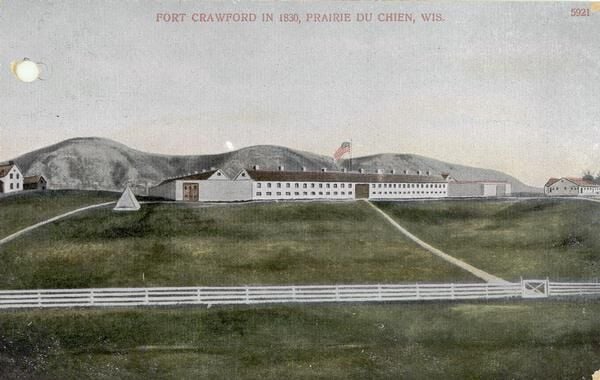
Enslaved African American people were held at forts by military officers throughout the Northwest Territories. During the territorial period (1836-1848), there were at least 17 men, women and children held in bondage at Fort Crawford.
My research focuses on the experiences of Black northerners and Midwesterners on farms, and in small towns and cities in British and French North America in the 17th, 18th and 19th centuries. Slaveholding in the Northeast was legislated and regulated while slaveholding in the Midwest was sparse, irregular and relied on community consent. The social, political and economic reach of the institution of slavery in the Northeast was the focus of my first book — Dark Work: The Business of Slavery in Rhode Island. Contestations over race and citizenship in the Midwest are the focus of my current book — Black on the Midwestern Frontier: Contested Freedom in Wisconsin, 1787—1868. The 1787 constitutional ban on slaveholding in the Northwest Territories was regularly violated and by 1820, there were more than 1,000 people held in bondage in the territories and free Black men were barred or restricted from voting in all Northwest Territories states. Race and rights have always been contested in the Midwest, and current racial disparities are rooted in these often-unacknowledged histories.
People are also reading…

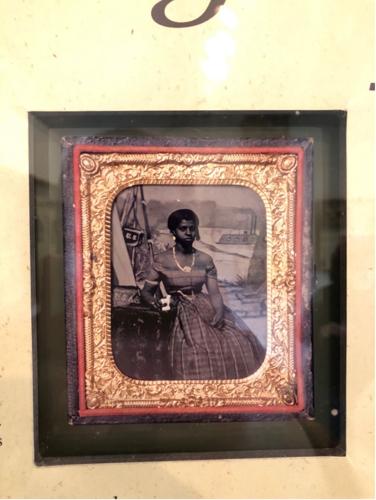
Caroline Sheppard was a resident of Pleasant Ridge, which was a Free Black Settlement in Grant County.
My current research was inspired by students. When I began teaching in the Fall of 2010, I told my students that history was personal and inherently political. Relying heavily on historian Gerda Lerner, I told them that history matters because it is an essential part of what makes us human. History explains our place in the world and the histories we know and claim shape our understanding of those around us. Students noted that I had no specific material on Wisconsin, and I sought to address that omission.
A series of short historical essays about Black Wisconsinites written by reference librarians at the Wisconsin Historical Society became the foundation of a series of lectures that I incorporated into my Introduction to African American History course. They also inspired the questions that became my current research project: What were the experiences of Black people in the early Midwest and how did they shape the region? More specifically, how did the limited practice of race-based slavery, the migration and settlement of free Black people and debates over abolition and Black rights shape race relations in the Midwest? Investigating these questions is exhilarating but tedious and time-consuming, because the archives were built to collect the records of the colonists — the Europeans who claimed North America and carved out the geographic regions we now take for granted. Although archival evidence about Black Midwesterners before the American Civil War is often frustratingly brief and fragmentary, their stories are essential to understanding the creation and formation of the American Midwest.

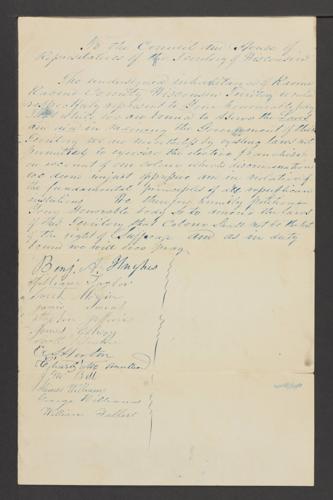
Benjamin A. Hughes and 12 other African American men in Racine County petitioned the Wisconsin Territorial Legislature for the right to vote. “Remonstrance against the laws that prohibit suffrage based on skin color.”
Recovering the histories of men, women and children who resisted their bondage and strove to build lives within the strictures of race-based slavery and state-sponsored racial discrimination is as difficult as it is rewarding. Some days in the archive yield nothing but brief references to the lives of Black Americans who were forced to labor, other days I rediscover a young woman’s successful freedom suit or a riveting petition written by free Black men who were demanding a place in the territorial government. Telling the stories of free Black Americans like New York-born Titus Sutphen and the Virginia-born Shepard brothers who traveled hundreds of miles and became significant landowners is beautifully complicated — they were in search of liberty, but they were also part of the American colonization project that dispossessed native land. Illuminating the stories of Black Wisconsinites like Ezekiel Gillespie who demanded full citizenship and the right to vote reminds us that antiblackness and Black political assertion are part of Midwestern history.

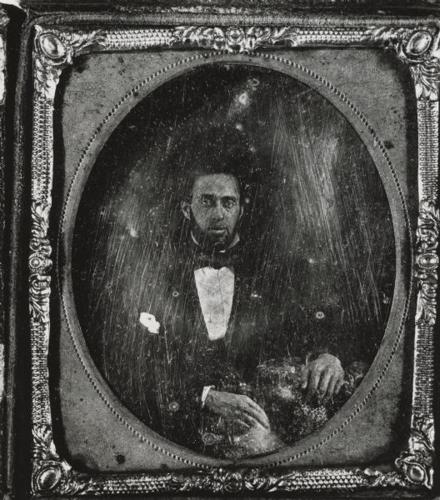
Ezekeil Gillespie successfully sued for the right to vote in Wisconsin in 1865. In 1866, the state Supreme Court overturned the ban restricting the vote to “free white men.”
Black people came to the Midwest by force, coercion, false promises or in search of freedom and liberty. Their presence in this place was part of the disruption and displacement of Indigenous people. These stories are essential to understanding the economic, social and political development of the state of Wisconsin and the Midwest at large. The function of history is not pride or shame, it is a serious and measured inquiry into the spaces and places we call home. History allows us to understand why our world looks the way it does. Historical research is a mirror and lesson about the human condition — our triumphs, shortcomings, and most importantly, our capacity to change and empathize.
--
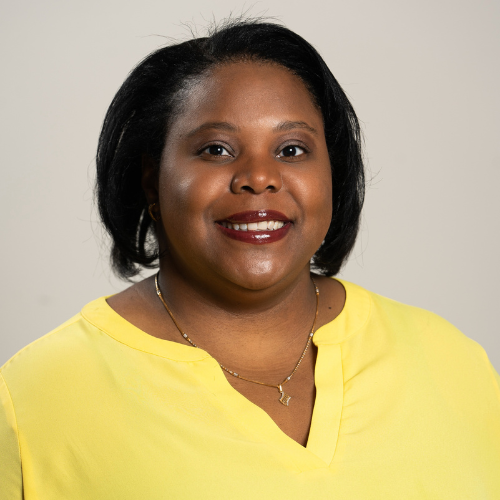
About the Author
Christy Clark-Pujara is the chair and a professor in the Department of African American Studies. She is also an affiliate in the Department of History. Clark-Pujara earned a B.A. from the University of St. Thomas and a Ph.D. in American History from the University of Iowa.