
The 2008 U.S. presidential election was in full swing at the start of my junior year of college. As a political science major, I considered it important to be an informed voter, especially since this was my first time voting in a presidential election. Civic technologies played a huge role in facilitating political discussions that election cycle, bringing the crowds from every part of the country to a digital town hall. Through platforms like Facebook, YouTube and Twitter I was amazed at how groups of people across the nation came together to engage in meaningful political discussion. It was during this time that I developed a passion for building and understanding how people — “the crowd” — could engage in meaningful action facilitated by well-designed digital technologies.
Since then, technology has grown at a frantic pace. Large language models can now synthesize information at an unprecedented scale and autonomous vehicles can navigate without human intervention. This has caused a dramatic shift in how people collaborate, communicate and relate to one another. We know that many of the challenges we face today involve computers, but often we forget about the social — or the socio-technical — dynamics. This inspired me to explore how the development of technology can be augmented and enhanced to support insights from a diverse crowd.
People are also reading…
Propelled by my interest in civic technology as an undergraduate student, my research at UW–Madison is focused on ways of incorporating diverse perspectives in the design and deployment of civic technologies. One of my recent projects aims to develop tools that amplify the voice of minoritized groups in policy. This work started in 2021, and it involves faculty and students across multiple departments including Life Sciences Communication, the Information School, Statistics, Computer Sciences, Education Leadership and Policy Analysis, and the Energy Analysis and Policy program. The project brings together community-based organizations (CBOs) in Wisconsin and local government to learn about the environmental challenges faced by these groups. In October 2022, we organized two community events in Madison where 100 community members shared their views and experiences about topics like tree coverage in their community, air quality concerns and urban heat. In April 2023, we launched a website where we received responses from 300 community members answering questions about these topics.
Conveying the data we collected with integrity is pivotal in this research. It ensures that the lived experiences of minoritized groups are preserved and honored. We paid careful attention that the voices represented in our data were comprehensive and diverse, the methods we employed portrayed the community’s data in a manner that remains true to their reality and leveraged narratives to effectively advocate for community needs to local government officials and policymakers. This led us to a participatory design, which included interviews with CBOs and their constituents. These taught us that representing their data accurately was a critical area of concern. We also learned that the stories about the negative impacts of climate change are critical to their advocacy efforts of local government stakeholders when they are communicating funding needs to policymakers.
These insights have led to the Knowledge Map (KM), a platform to report community attitudes and experiences with climate change. Users can view summary data by geographies (census block or congressional district). We incorporated machine learning to summarize written narratives about people’s experiences with issues like air quality in their community. Users can also learn about the representation of a different group’s voices in the data. When a group’s insights are underrepresented, KM suggests strategies and CBOs who could assist in outreach.
At the core of my research is investigating how best to design civic technologies that facilitate meaningful action. This goal involves research that incorporates the social, cultural and historical contexts into the design and deployment of systems. Community-based participatory research, like this project, ensures that everyone has a voice in how systems are developed and deployed and how they are represented in data. The Knowledge Map and the community data that will be housed within ensures that the policies focused on mitigating climate change are responsive to and representative of the diverse needs, values and goals of people in Madison and Dane County.
--

About the Author:
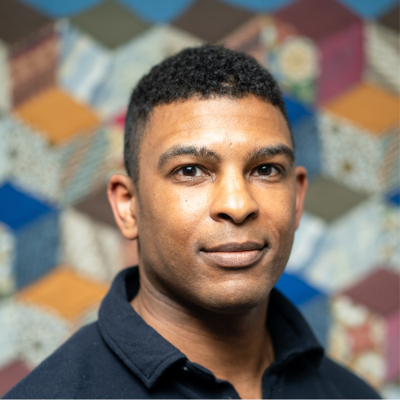
Corey Jackson is an assistant professor in the Information School at the University of Wisconsin–Madison. Jackson’s teaching focus is on the design and deployment of digital technologies.