







Researchers at the University of Wisconsin–Madison have developed a simpler way to produce a fast-growing class of targeted cancer therapies, a discovery that could make the medicines easier to manufacture consistently while driving the development of new treatment options.
The work, supported by the National Institutes of Health and recently published in the journal Angewandte Chemie, describes a streamlined approach to creating homogeneous antibody-drug conjugates, or ADCs. These therapies combine antibodies that seek out specific cells with potent drug payloads aimed at treating diseases.
ADCs are already beginning to transform cancer treatment, but drugmakers have struggled to manufacture them at scale with a high level of consistency. Instead, current methods often produce a mix of slightly different molecules, making manufacturing more complicated and quality control more burdensome.
People are also reading…
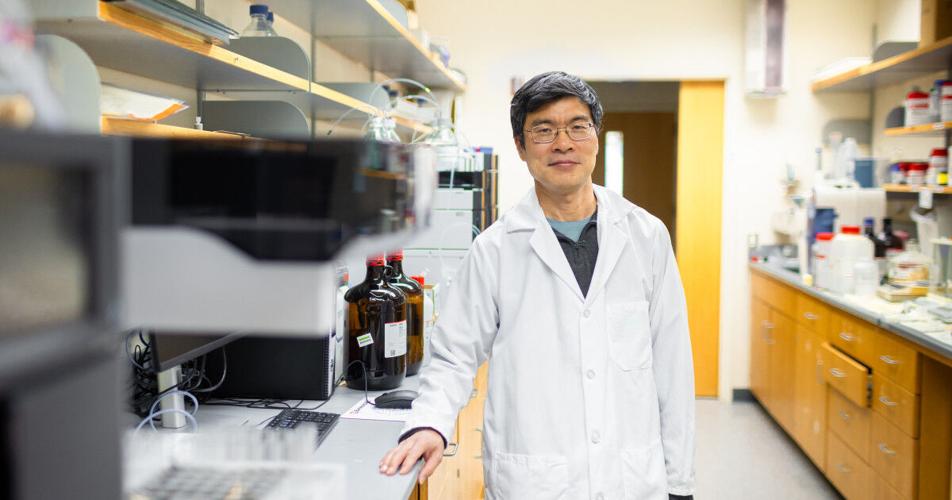
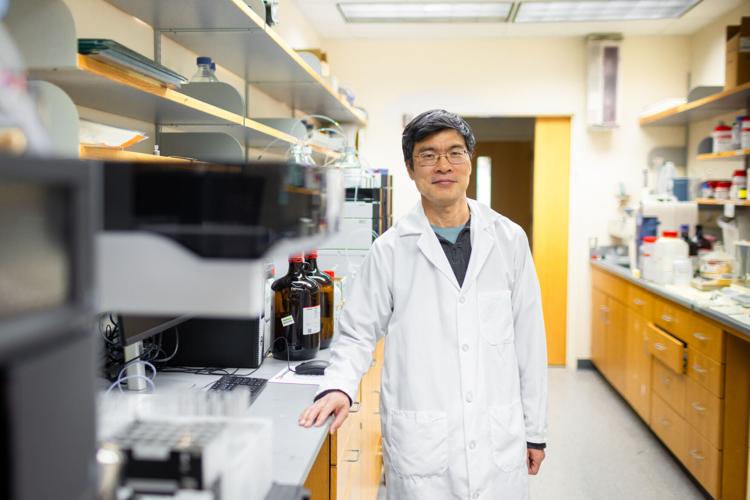
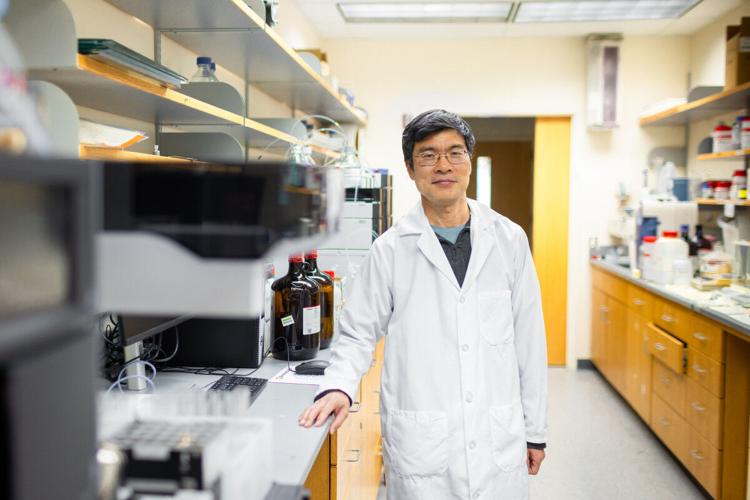
Weiping Tang, a professor in the UW–Madison School of Pharmacy, leads a research team that develops new drugs and drug delivery methods. ADCs are among the molecules they work with, and, like others, the researchers struggled to produce them with the consistency they needed.
“We tried a number of different strategies, and they all worked at creating ADCs, but we weren’t happy with any of them,” says Tang, who led the new work. “There were always issues.”
After significant trial and error, Tang’s team finally developed a process that removes much of the natural variability found in antibodies before attaching the drug payload, producing a highly uniform final product.
The advance also dramatically simplifies preparation of one of the key building blocks required for the process, from more than a dozen steps to just two steps.
“For us, it’s really about quality control,” Tang says. “You can precisely measure each batch, know exactly how many drug molecules are attached and improve batch-to-batch consistency.”
The advance grew out of another line of research. Tang’s laboratory has been working on targeted protein degradation, an emerging strategy that harnesses a cell’s own waste-disposal system to eliminate disease-causing proteins. That work required attaching small molecules to antibodies, but existing methods were cumbersome.
Rather than accept those limitations, Tang and his colleagues designed a new approach that removes the variable portion of an antibody’s natural sugar structure and replaces it with a carefully designed sugar carrying the desired payload. The resulting antibody conjugates are highly homogeneous, with a well-defined structure.
In laboratory studies, the researchers used the technique to create antibody-drug conjugates that selectively killed specific cancer cells while largely sparing other cells. They also adapted the platform to demonstrate that the technique can support multiple types of targeted medicines, opening the door to potential treatments for many diseases.
We started this work because we needed a better way to make our own molecules. Then we realized it could be broadly useful.
— Weiping Tang, UW–Madison School of Pharmacy professor
The findings have already led to the launch of GlycoBridge Biosciences, a UW–Madison startup that has licensed the technology through the Wisconsin Alumni Research Foundation. The company recently received a SEED grant from the Wisconsin Entrepreneurship Hub to help refine the technology and prepare it for broader commercial use.
Tang says the company is already discussing the platform with biotechnology companies, contract manufacturers and investors interested in next-generation antibody therapeutics.
“This is really just the first step,” Tang says. “Once we opened the door, we realized there are many opportunities to continue improving the technology.”
The research described here received support from the National Institutes of Health (R35GM148266; R01DK071801; R01AG052324; R01AG078794) and the Wisconsin Alumni Research Foundation.


