


Radiopharmaceuticals have been an exciting new frontier of precision cancer treatment. These drugs combine a radioactive isotope with a targeting molecule to either create images of tumors in the body or deliver a radiation treatment directly to them.
But while there has been success with these treatments, there is a push among researchers to further personalize them for each patient’s unique anatomy.
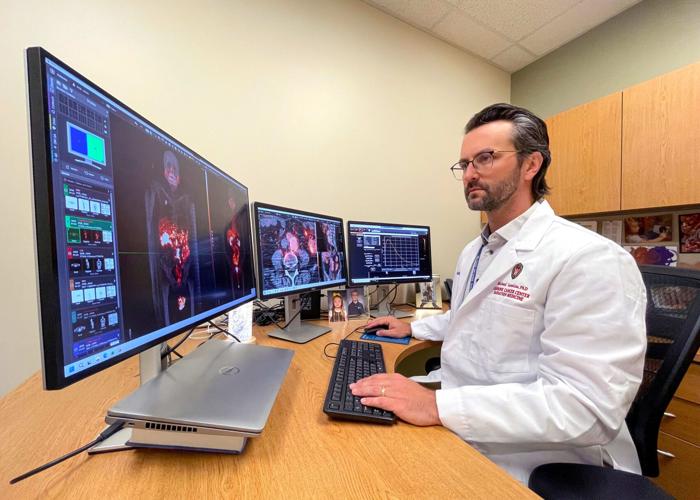
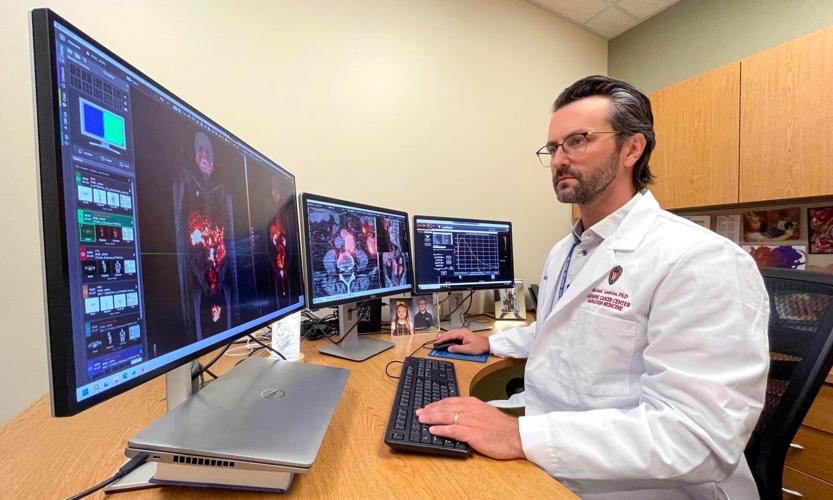
Michael Lawless, PhD, director of theranostic physics and associate professor of human oncology in the University of Wisconsin School of Medicine and Public Health, is among those studying ways to predict and address toxicity from radiopharmaceutical treatments. He’s also investigating ways to calculate the optimal radiation dose needed for each patient in the clinic.
“These drugs are popular because they’re effective, but there is room for them to be even more effective as we move forward,” he said.
People are also reading…
Mitigating blood and marrow toxicity
Lawless is leading a collaborative effort to predict which patients will experience blood and bone marrow side effects from radiopharmaceuticals. The bone marrow, which produces new blood cells, is particularly sensitive to radiation, and a common side effect is a drop in blood cell counts. This leads to weakened immune function and other serious issues.
“If we knew ahead of time (who was more sensitive) we could adjust their dose, try to limit their exposure, or give them a longer break between treatments to mitigate that,” Lawless said. “But thus far, it’s proven to be a pretty difficult thing to predict and solve.”
His research uses imaging that can measure fat within the bone marrow, which can help identify which marrow locations are more active in creating blood cells than others.
“We think by laser focusing on where the active marrow is, and also the dose going to the active marrow, we will be able to better predict patient toxicities. We can then either adjust treatment to not get to that toxic level, or potentially be better prepared to support the patient who needs that therapeutic benefit of the drug,” he said.
Lawless is leveraging a specialized magnetic resonance imaging technique developed by Dr. Scott Reeder, chair of the University of Wisconsin Department of Radiology, to study liver fat content. Another key collaborator is Diego Hernando, PhD, assistant professor of radiology and medical physics.
Data from preclinical modeling and small pilot trials with patients has been promising, and they are working on opening a full clinical trial soon.
Challenges of personalization
While radiopharmaceuticals are a promising treatment for many cancer patients, one drawback is that they are FDA approved at a standard dose level for all patients.
“Under the current rules, Shaquille O’Neal and Danny DeVito would get the same amount of drug,” Lawless said. “That’s probably not best just based on their sizes, much less how much disease they have, or how their body processes the drug.”
Dosimetry, which calculates the radiation dose needed for treatment, is a key part of traditional beam radiation therapy. Key factors that impact dosing include a patient’s anatomy, the amount of tumors they have, and how the radiation is being delivered.
In traditional beam radiation, that dosing can be established before a patient starts treatments. For clinical radiopharmaceuticals, the dosimetry work can’t start until after the patient receives their first dose of the drug, and imaging shows how the body processes it. Right now, adjusting the dosages of those drugs can only happen in research centers because it is not within the FDA approved use.
Emerging software for radiopharmaceutical dosimetry helps calculate how much energy from radiation is deposited in the different organs and tumors of a patient. That way, they can determine the optimal dose needed to impact the cancerous tissue while keeping healthy tissues safe.
Lawless hopes that in the future, these dosimetry calculations can be used to tailor the treatment specifically for each patient, as opposed to the current one-size-fits-all standard.
“Myself and others at UW, and other institutions around the world, really want to get to a point where we have the data to support adjusting these drugs to make it truly patient-specific,” he said.


