


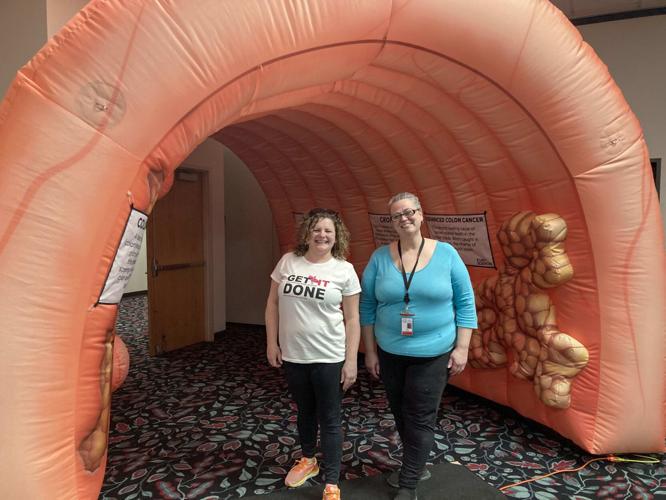
Ashley Smith, RN, has been building relationships across northern Wisconsin’s rural communities, including Tribal Nations, as an outreach specialist for UW Carbone’s Cancer Health Disparities Initiative. Her role includes working with community partners on grant-funded health initiatives and staying active in local health fairs and public events.
This includes Share the Care 2026 Indigenous Cancer Conference, happening June 23-25 in Lac du Flambeau, Wisconsin. This free public event connects attendees with Tribal health leaders and features talks from subject-matter experts on topics such as cancer prevention, treatment, survivorship and community support.
For Smith, who lives in Ashland, Wis., and previously worked in hospice nursing, taking this rural outreach role at UW Carbone nearly four years ago was a natural fit.
People are also reading…
“There is this awareness that there are extra challenges, a greater burden on people living in rural areas … and there are just so many challenges inherently in rural cancer care,” she said.
U.S. Census Bureau data estimates about 25% of Wisconsin’s population is classified as rural residents and about 2.5% identify as American Indian or Alaskan Native. Carbone population health researchers are studying the factors that can influence cancer risks for these residents, including environmental factors, access to care and socioeconomic disadvantages.
Smith’s focus has been on building relationships across northern Wisconsin, especially with local health providers and Tribal community leaders. She provides educational materials and resources, but a key part of her work is also to ask questions and learn about their concerns and needed resources.
“I feel like my job is to show up and listen and build trust,” she said. “It’s not about what I think they need. I show up and ask what needs to be done, how can I help.”
This has led to presentations on community-driven cancer prevention topics, clinical trial education and grant funding for local cancer prevention programs.
One key project has been free radon testing and mitigation assistance in homes on Tribal land. Radon is an odorless naturally occurring radioactive gas that enters homes through the foundation and builds up in interior air. Prolonged exposure to high radon levels can lead to lung cancer.
Starting with a successful collaboration with the Stockbridge-Munsee Band of the Mohican Nation Reservation, additional radon testing has been underway with Bad River Band of Lake Superior Chippewa and Sokaogon Chippewa Community Mole Lake Band. UW Carbone’s outreach program leader Dr. Noelle LoConte is the principal investigator for these radon initiatives.
UW Carbone also provides funding for the Wisconsin Inter-Tribal Pink Shawl Initiative, a nonprofit focused on educating women about breast health and providing a support community for cancer survivors.
Their name reflects the intricate shawls women in the group design to represent their experiences with cancer and survivorship, and they’re showcased in a ceremony during Pink Shawls’ mobile mammography events.
“It’s this beautiful way to honor native communities while doing education and reminding folks of the importance of screenings,” she said. “It’s a cool balance of culturally tailored activities, these incredible pieces of art, and education.”


