



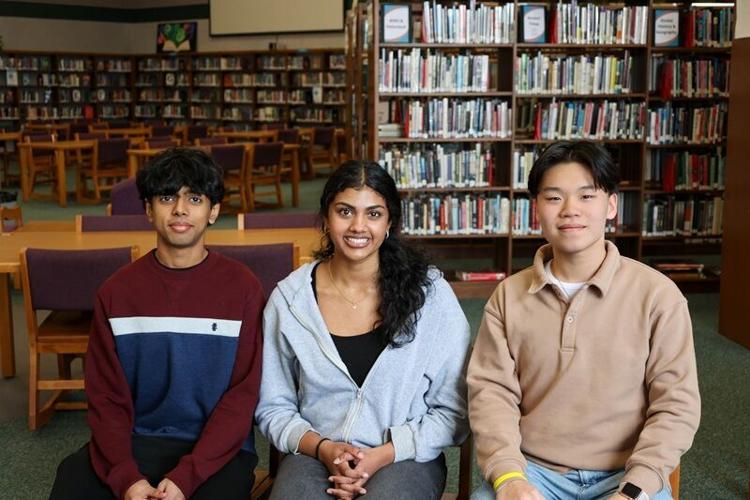

Wisconsin’s public schools can be transformative places for innovation and leadership, and students at Ashwaubenon High School are proving it. Led by just three students—Amrusha Prathigudupu, Akshath Yadawad, and Ryan Lai—their initiative, Bridging the Gap, is expanding educational access for children thousands of miles away.
The idea originated last year with Prathigudupu as part of her involvement in DECA—an international business and marketing club focused on building future leaders. Prathigudupu, now a junior, wanted to find a meaningful way to share educational materials with children at the Mathrusya Child Home, a charitable orphanage that provides shelter, care, and education to children ages 4-16 in Tirupati, India.
With limited resources at the start, she turned to her own school district for help. She taught seventh-grade students at Parkview Middle School how to use the program Book Creator to publish original stories they wrote. She then coordinated with local volunteers in India, who printed these stories—300 in total the first year—and distributed them to the children. Prathigudupu raised about $800 in her first year—more than enough to cover the printing costs—allowing her to also purchase additional school supplies and make a cash donation.
People are also reading…
This year, the project has expanded significantly, with seniors Yadawad and Lai joining the team. Together, they engaged even more students across the district to write stories, adding classmates from Ashwaubenon High School as well as fourth- and fifth-graders from Valley View and Pioneer elementary schools. In total, the students created 800 stories to share. This year, the stories are being distributed among three government-funded schools in India.
The stories offer a glimpse into everyday American life, covering topics ranging from football and dance to snowball fights.
“When these really unique stories are sent to India, it kind of builds a connection between two different countries and two different groups of children,” Lai said.
In addition to involving students, the trio said the project also brought community members into the effort. They raised money partly through grants and letter writing, but also went door-to-door fundraising, giving them the opportunity to share their mission directly with neighbors.
“This project has two sides—promoting education is one but another is just bringing the community together,” Yadawad said. “We personally went house to house asking for money and advertising our project. People were excited to hear that we were doing something good that not only benefited American community members, but also Indian community members. It built a stronger connection between two different sides of the world and that’s the main goal of the project.”
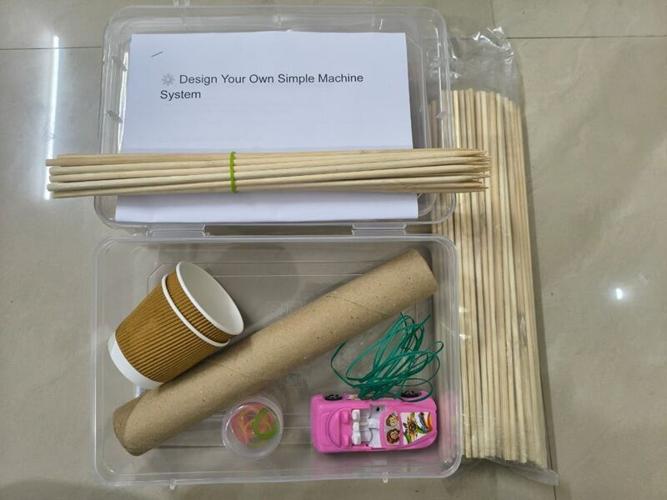
Fundraising this year reached $2,500, allowing the students to send more than just books overseas. With a goal to provide underserved Indian students with access to educational materials beyond their traditional theory and textbook-based learning, they connected with the Einstein Project at UW-Green Bay to source ideas for creating STEM kits. The students then designed and assembled the kits themselves, creating 48 kits across six different STEM activities.
With the additional funds raised, the students were also able to donate more school supplies and contribute toward scholarships.
The students said their commitment to the project is rooted in a shared belief in the importance of education—something that has always played a central role in their own lives and now inspires them to give back.
“My parents immigrated from India, and they put a big value on education, because that’s what led them to have more opportunities,” Yadawad said. “This is my way of giving back so other people in India can also get more opportunities.”
When the students in India receive the donations, a video is shared back with the Ashwaubenon students. Moments like this, Prathigudupu said, help put the work into perspective.
“The project was hard, but it was also so rewarding,” she said. “I remember last year I got the video the day after they distributed the materials in the orphanage, and I saw how excited the kids got over a new box of markers. I was never that excited when I got a box of markers in elementary school. So just seeing the excitement or seeing them flipping through the pages of the book, makes it more rewarding than anything.”
“They’ve really poured their hearts into this initiative,” said Kristin Turnbull, the school district’s THRIVE coach, who helped mentor the students. “What has truly impressed me is their ability to unite students from various grade levels and schools to collectively make a difference. The enthusiasm and dedication for the Bridging the Gap Project inspired their peers to participate in meaningful storytelling. It speaks volumes about the positive impact young leaders can have when united for a common purpose.”


