

Wild rice plants have been dwindling on Allequash Lake in recent years, so researchers are collecting data in hopes of understanding why.
Situated near the northern border of Wisconsin in Vilas County, Trout Lake Station (TLS) is surrounded by more than 3,000 lakes. And as the director of this 77-acre College of Letters & Science field laboratory, I help host researchers conducting scientific studies on many (but not quite all!) of them. Waterways make up almost 35% of the land cover in the region and are part of the community’s identity and connection to the area. That makes it the perfect place to practice limnology, the study of inland waters. It also makes it a great place to live for TLS staff and scientists.

Trout Lake Station researchers take water samples and count plants.
Our station grows each summer, as we host graduate students leading teams of technicians and undergraduate researchers, who work on a variety of topics including crayfish parasites, threats to wild rice, native fish stocking plans, defining human-lake relationships and high-tech water quality sensors. Any given summer we can have upwards of 40 additional people living on station and immersing themselves, often quite literally, in rural Wisconsin lakes.
People are also reading…

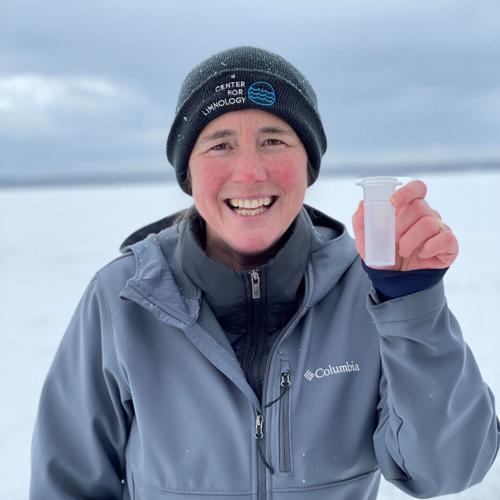
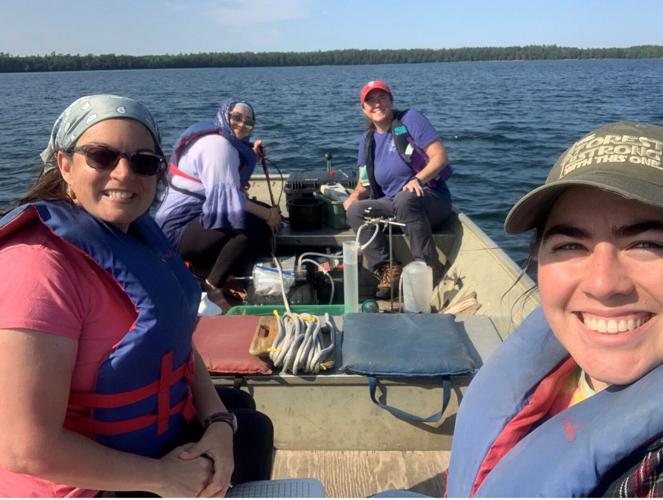
Gretchen Gerrish gets out on the water with a crew of researchers.

Student researchers collect and test water samples on Escanaba Lake.
I decided to transition from a standard faculty position to the Trout Lake Station directorship to join in this annual summer community and to guide place-based, nature-led training and multidirectional mentorship. Field studies allow students to observe, converse with, and participate within the natural and human systems of their work. The living beings within and around the waters, their behaviors, our measurements and natural variability become tangible when observed firsthand. Students learn that field work requires creativity and problem solving. I love guiding students through these challenging hands-on experiences and learning alongside each year’s crew, as we explore all that the local waters can teach us.

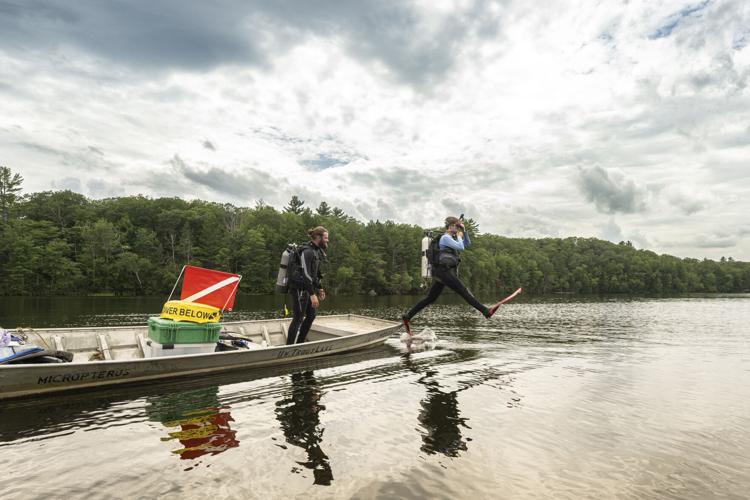
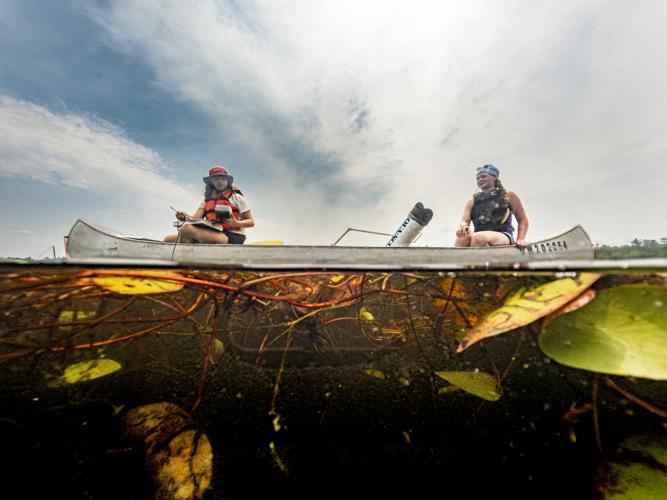
Student researchers dive into Escanaba Lake to clean the water sensors used for research.

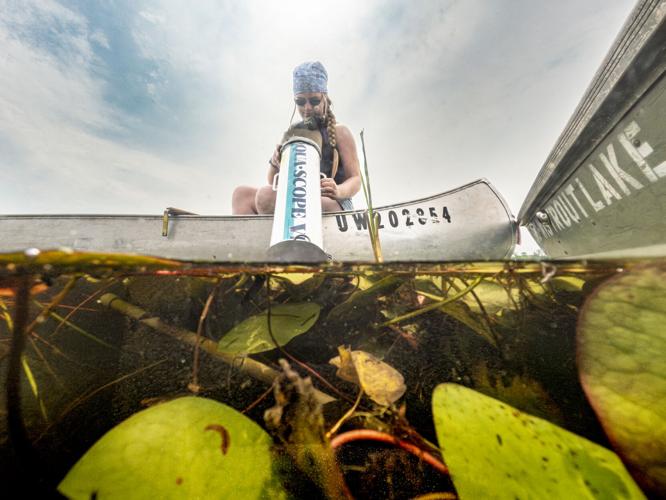
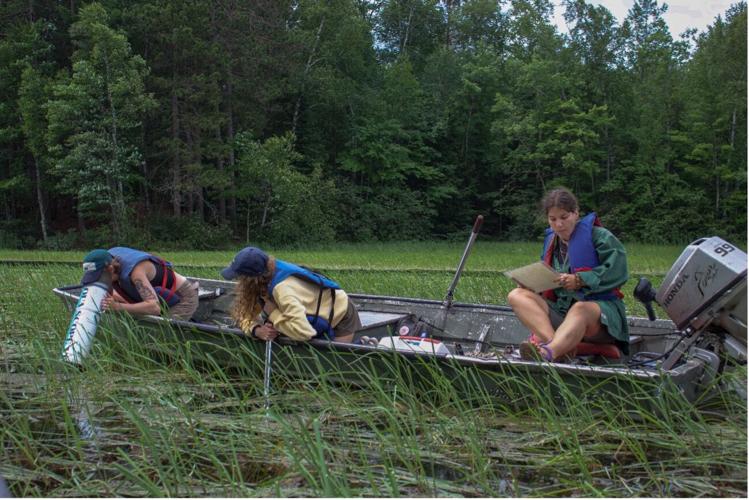
Wild rice plants have been dwindling on Allequash Lake in recent years, so researchers are collecting data in hopes of understanding why.
Having grown up in small-town Wisconsin, I also appreciate the opportunity to represent UW–Madison in rural Wisconsin. In smaller communities we often come together over lake topics and discussions. While not always unified in viewpoints, there is a shared passion to keep our freshwaters accessible and vibrant for generations to come. With water as our connector, TLS works with regional schools, artists, agencies, tribes, lake groups, businesses and community groups to promote and plan relevant research.
For example, one of my projects asks how climate change impacts our waters. With warming temperatures, lakes throughout Wisconsin are experiencing unpredictable seasons of snow, ice and open water. Back in 2001, it was novel when Madison’s Lake Mendota had its first year with only 21 days of ice cover. Now, the lake regularly has fewer than 30 days of safe ice for recreation and fishing.

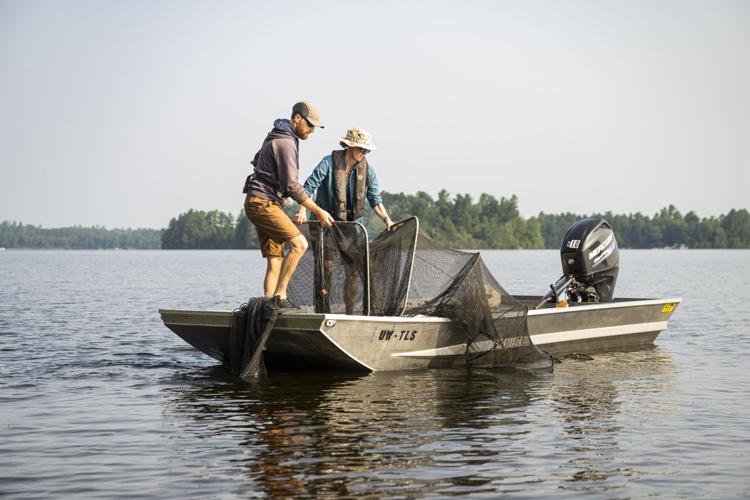
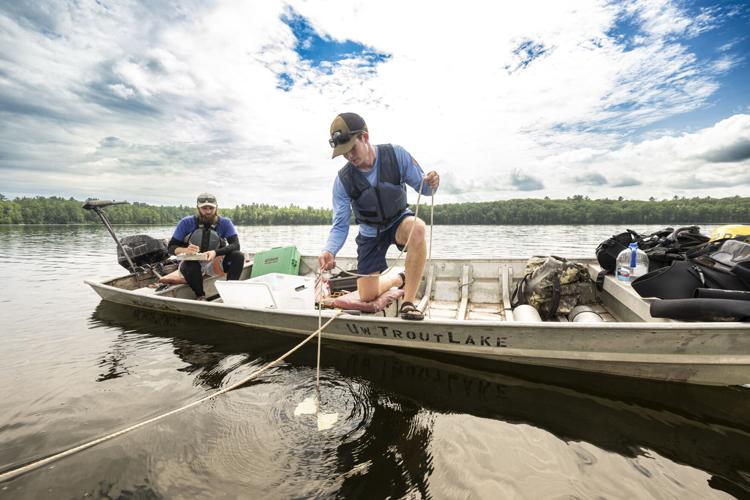
Researchers collect data on fish type, size and weight in Trout Lake.
Up north, winter is still prominent, but snowpack is no guarantee and the spring ice-off is becoming less predictable. We are studying how these changes in ice-off dates impact the whole system, from spring algae blooms to fish spawning to the temperature of available habitat in a lake. We are finding evidence of all sorts of impacts, including changing food web dynamics and negative trends in the reproductive success of important fish species.
This year, we’re celebrating 100 years of asking and answering these kinds of questions on the shores of Trout Lake. Generations of Trout Lakers who have spent summers learning and living together on station remain connected and hold prominent academic, agency and industry positions throughout the Midwest and around the world. I have had the privilege of meeting many people who consider their Trout Lake experiences as formative to their identities and their careers. As we look toward the future, I am inspired to continue building these connections and to broaden our perspectives and research to match the ever-changing world that our waters are facing.
—

About the Author
Gretchen Gerrish is the director of UW–Madison’s Trout Lake Station, a remote field station in northern Wisconsin and one of two field laboratories that make up the Center for Limnology. She is an evolutionary ecologist whose research focuses on unique life histories and behaviors of aquatic invertebrates and their role in driving short- and long-term ecosystem dynamics. She actively works to promote safe and inclusive field-based research and education.