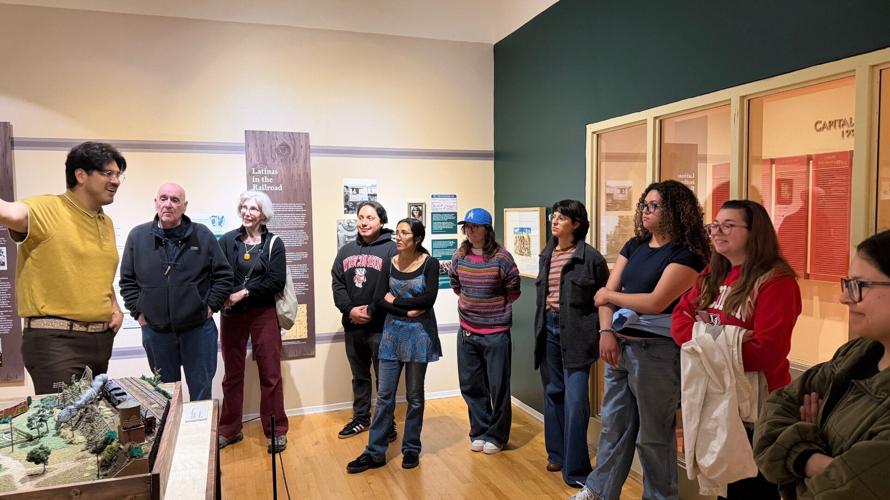

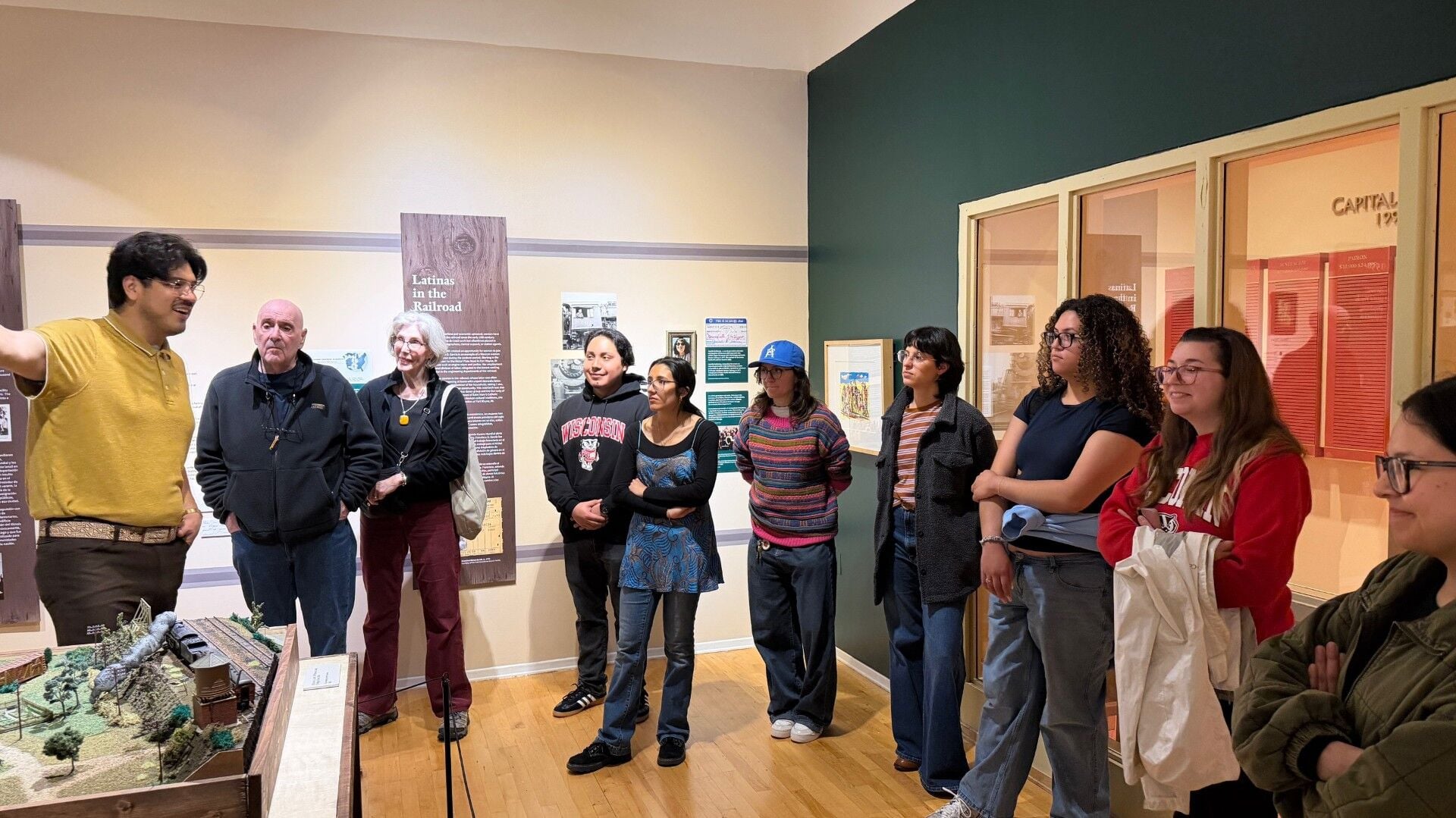
UW–Madison alumnus Ismael Cuevas shares the “Rieles y Raíces” exhibition with a group of students.
A recent visit to the National Museum of Mexican Art in Chicago reminded me of the power of Latinx studies. I went with students to see the “Rieles y Raíces” (“Tracks and Roots”) exhibit, which is all about the Mexican American workers who built railroads in the U.S. in the 20th century. This engaging and carefully researched exhibit shed new light on the long-untold histories of Latinx peoples in the U.S. You know what else was great about this exhibit? It was co-curated by UW–Madison graduate Ismael Cuevas, an alum of the program at UW–Madison where I now teach and research: Chicanx/e and Latinx/e Studies (CLS).
My research and teaching in English and CLS focus on Latinx literatures and visual cultures, so seeing “Rieles y Raíces” reminded me of the work of Latinx creative writers such as Tomás Rivera, Ana Castillo, Sandra Cisneros, Hugo Martínez-Serros, Luis Rodriguez and Fred Arroyo who offer us rich portraits of the perspectives and lives of Latinx agricultural workers, janitors, waitresses, cooks, upholsterers, assembly-line workers and steel workers in the Midwest. The exhibit is part of a broader shift in the last 20 years within Latinx studies to recognize, document and analyze the histories and cultural expressions of Latinx in this region. I have been fortunate to have been a participant in this shift through my work with colleagues across the Midwest on Building Sustainable Worlds: Latinx Placemaking in the Midwest, The Latina/o Midwest Reader and a book that I authored in collaboration with several Milwaukee Latina leaders titled Latina Lives in Milwaukee.
People are also reading…

Theresa Delgadillo researches Latinx literatures and visual cultures.
Latina Lives in Milwaukee offers a history of Milwaukee Latinx peoples across the 20th century through a series of life stories by a selection of its Latina residents. These women tell us about the lives of those who arrived as immigrants between the 1920s and the 1960s. They describe how communities and families changed, what opportunity looked like and what opportunities were foreclosed, what it took to keep a family or business together and how they participated in building and supporting Latinx communities. Building Sustainable Worlds brought together scholars across the Midwest to study the role of cultural expression in sustaining communities among multiracial Latinx populations. We looked at ethnic festivals, literature, performance, art, and spiritual and religious gatherings and found in these varied cultural expressions evidence of persistence, survivance, growth and transformation.
All of this work on thinking about the cultural dimensions of migration, and racial and ethnic diversity among Latinx peoples, also led me to consider this hemispherically. My recent book, Geographies of Relation: Diasporas and Borderlands in the Americas, focuses on Latinx, Latin American and African American film, fiction and performance. This work departs from a regional or national framework to examine the significance of relational thinking in forging fluid bonds and cultures across borders and nationalities among Black, Indigenous and mixed-race peoples in the Americas.
Since much of my research agenda centers on topics and issues that are of interest beyond academia, I seek ways to share as much Latinx studies research as possible beyond the university setting. Geographies of Relation is, therefore, an open-access publication, available for free to anyone across the globe who wants to read it. My deep interest in open access publishing goes back to 2011, when I founded an online academic journal now known as Latinx Talk. Dedicated to publishing short-form research and commentary in Chicanx and Latinx studies in a variety of formats made possible by digital publication, we publish research articles, audio and photo essays, reviews, commentary, video interviews and roundtable exchanges on topics from multiple fields within Latinx studies. Recently, we have published multiple series including “Deportation and Coerced Return in the Americas” and “Latinxs and the Right.” We’re also publishing interviews with scholars and writers and articles on Puerto Rican art, early 20th century support for Mexican migrants in Kansas, the war against Venezuela and more. Plus, we’re working on a DIY stickers project for ethnic or social studies teachers.
UW–Madison students have worked on and published with Latinx Talk, as the site has expanded opportunities for undergraduates to share their research. When I began this publication more than 15 years ago, there was little information about Latinx studies available online. Latinx Talk has been a part of changing the digital information landscape by making peer-reviewed and engaging short form research about the diversity of Latinx populations in the U.S. widely available at no cost. Built through collaboration and a practice of mentoring, our site now has international and national reach. This year we were selected by the LYRASIS Open Access Community Investment Program as a diamond open-access publication deserving of support.
—
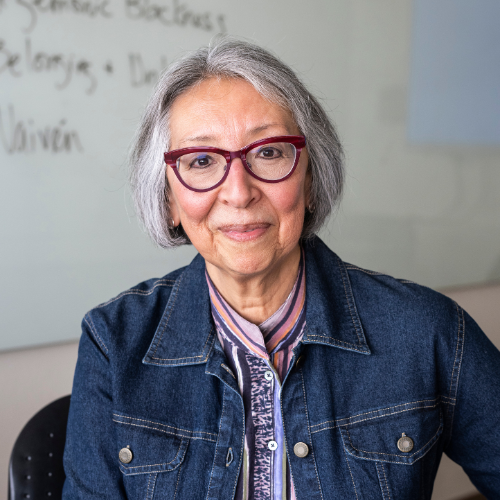
About the Researcher
Theresa Delgadillo is the Vilas Distinguished Achievement Professor of English and Chicanx/e and Latinx/e Studies. She is the founder of the academic journal Mujeres Talk and the co-founder and current board member of Latinx Talk, an interdisciplinary academic open access publication specializing in short-form research.