

Dr. Gina Bryan
Throughout her nursing career, Dr. Gina Bryan has seen firsthand how access to mental healthcare services can change lives, especially among Wisconsin’s most vulnerable patient populations.
“As an undergraduate student at UW–Madison, I had the good fortune of participating in an independent study at a county mental health center, learning from a psych mental health nurse practitioner who was quite simply excellent,” she said. “I saw what true community-based, person-centered mental healthcare could look like when provided in a manner rooted in social justice.”
Rotations in emergency rooms and crisis centers further solidified Bryan’s dedication to finding innovative ways to lower barriers and improve access to mental health care and substance abuse services. Now, as a clinical professor and psychiatric-mental health certificate coordinator at the University of Wisconsin–Madison School of Nursing, she works collaboratively with colleagues, doctor of nursing practice (DNP) students and Badger nurse alumni to serve communities across the state, all while balancing teaching duties and her clinical practice.

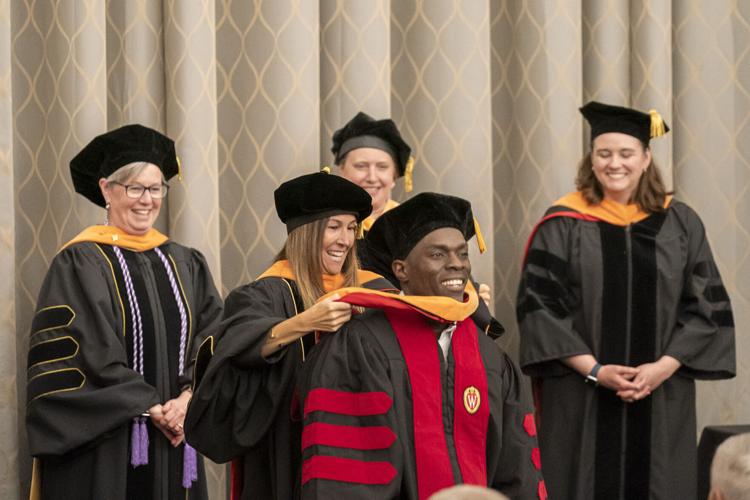
Graduate Hooding Ceremony at Cooper Hall May 10, 2024. (Photo © Andy Manis)
One of Bryan’s top priorities is addressing a shortage of critical mental healthcare services and providers due to lack of funding, reductions in educational offerings and low faculty resources. These shortages affect everyone, not just those who need the resources.
“I truly believe that a community is only as healthy as our least healthy residents,” Bryan said. “Certain communities are more directly impacted, such as people without insurance or who are underinsured, rural communities, children, LGBTQ+ and racial/ethnic minorities.”
Bryan also says that if the people providing the services don’t look like the people they serve, the clients are less likely to seek their help. Obstacles like cost, lack of transportation, long wait times for appointments and persistent stigma surrounding mental health are just some of the additional factors that keep patients from getting the care they need.

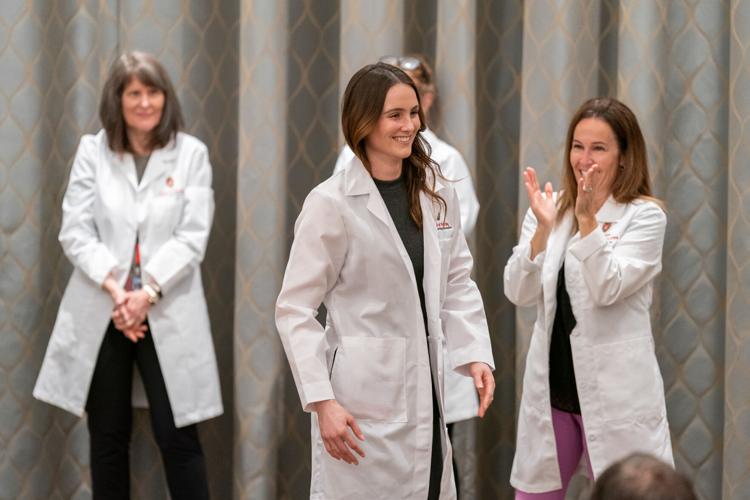
School of Nursing White Coat Ceremony, April 11, 2023
By placing students into underserved communities, the UW–Madison School of Nursing DNP program hopes to inspire them to continue working with patients in those locations after they graduate. The Psychiatric Mental Health DNP and Certificate programs, which prepare nurse practitioners, are offered in a hybrid format that includes in-person and online classes, as well as clinical rotations.
“We teach assessment, diagnosis and treatment of mental illnesses and substance-use disorders,” Bryan said. “We also cover trauma-informed care, motivational interviewing, evidence-based practice, leadership, quality improvement, health policy, population health, environmental health and other topics. This level of content diversity better prepares future providers.”
“We need to continue to work toward improved access to care when people are ready to receive care, and work against the marginalization of people who live with mental health issues and substance use disorders,” she said.
For more information, visit nursing.wisc.edu.