


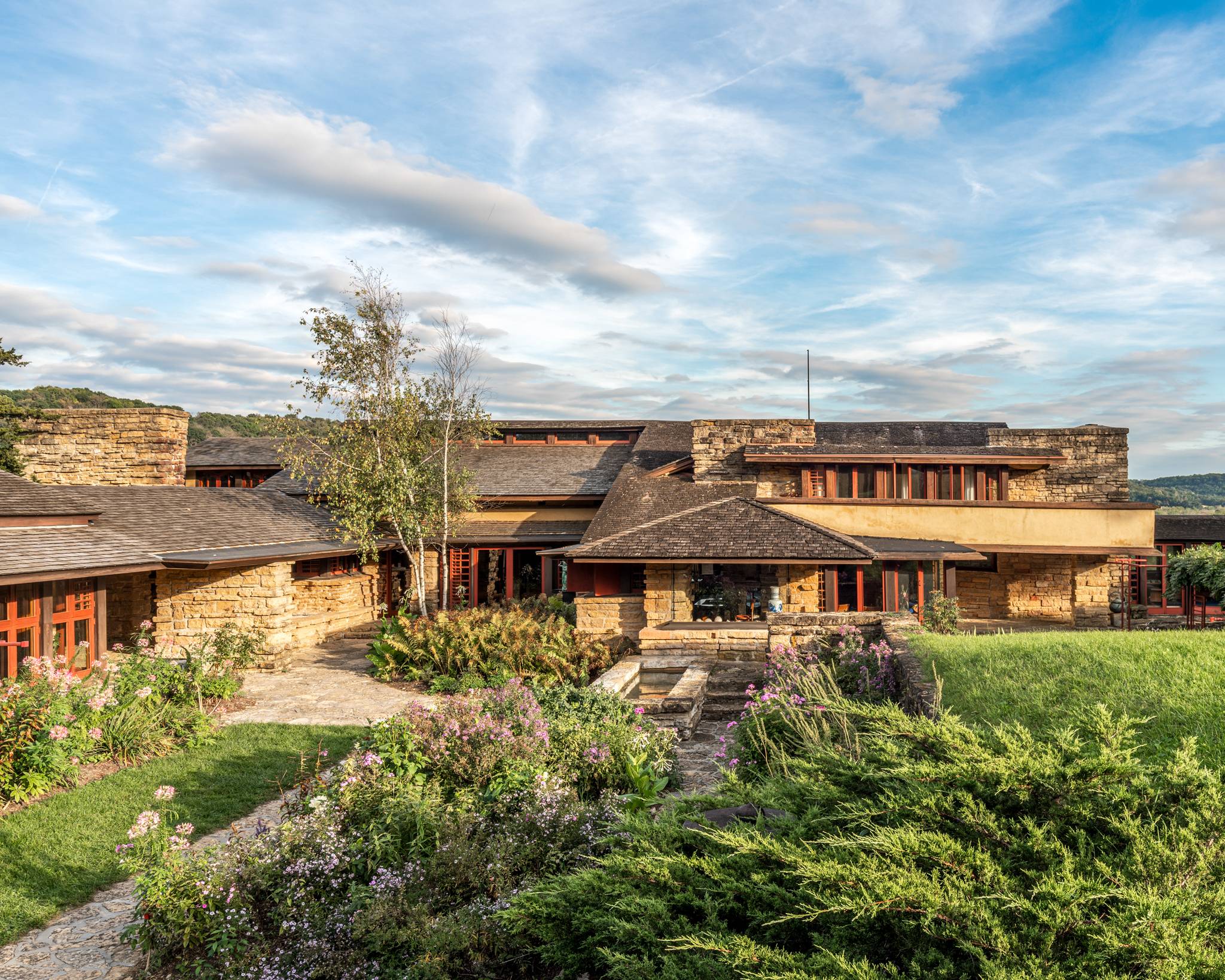
The rolling hills of Spring Green hold something rare: a place where architectural history isn't kept behind velvet ropes but lived and breathed daily. Taliesin Preservation, along with the Frank Lloyd Wright Foundation, steward Frank Lloyd Wright's personal estate, where the legendary architect spent decades refining his vision and teaching his philosophy.
Unlike museums that freeze moments in time, these organizations take a different approach. The preservation work here is active, ongoing, and visible. Wright himself constantly modified Taliesin throughout his life, and that spirit of evolution continues today through careful, research-based restoration efforts.
A Different Kind of Historic Site
Most historic houses become static monuments. Taliesin remains a working landscape where preservation specialists, researchers, and craftspeople apply Wright's principles in real time. The estate encompasses 800 acres of buildings, gardens, and natural landscape that Wright shaped over four decades.
Visitors witness preservation in action. Restoration projects often run simultaneously with tours, offering glimpses into the meticulous work required to maintain historic structures. This transparency reveals what historic preservation actually entails: detailed research, traditional craftsmanship, and constant decision-making about how to honor original intent while ensuring structural integrity.
The organization maintains multiple structures across the property, each representing different periods of Wright's career. From the original Hillside Home School buildings to the dramatic Midway Barn, these spaces tell stories about Wright's architectural evolution and his experiments with materials, form, and function.
Learning Through Direct Experience
Taliesin Preservation creates opportunities for deep engagement with Wright's work. Architecture students and researchers access archives containing drawings, correspondence, and photographs that document Wright's creative process. These primary sources offer insights impossible to gain from textbooks alone.
The estate serves as an outdoor classroom where Wright's integration of architecture and landscape becomes tangible. His careful placement of buildings, manipulation of sight lines, and use of native materials demonstrate principles that influenced generations of architects. Walking the property reveals how Wright thought about space, light, and the relationship between built and natural environments.
For historians and preservationists, the site provides case studies in adaptive preservation. The challenges of maintaining Wright's experimental construction techniques—including his innovative but sometimes problematic material choices—offer lessons applicable to other historic properties.
Supporting Architectural Heritage
The work of both organizations extends beyond maintaining buildings. By preserving Taliesin, they protect a complete environment that reflects Wright's holistic design philosophy. The agricultural buildings, stone walls, and cultivated landscapes are as significant as the residential structures.
This comprehensive approach to preservation ensures future generations can experience Wright's vision as an integrated whole. The estate demonstrates how architecture, landscape, and daily life intersected in Wright's thinking—something impossible to convey through photographs or isolated building preservation.
Educational programs connect contemporary audiences with Wright's ideas. Tours range from introductory overviews to specialized explorations of specific architectural elements or historical periods. Each visit supports ongoing preservation efforts while helping visitors understand why Wright's work remains relevant to current architectural practice.
Preserving More Than Buildings
What sets this preservation effort apart is its focus on context. Wright designed Taliesin as a complete environment where architecture, landscape, and creative work flowed together. Maintaining that integration requires different strategies than preserving a single structure.
Taliesin Preservation balances public access with conservation needs, allowing people to experience the spaces while protecting fragile materials and finishes. This balance ensures Taliesin remains accessible without compromising its historic integrity.
Researchers continue discovering new information about Wright's methods and materials through ongoing study of the property. These findings inform both preservation decisions and broader understanding of Wright's architectural legacy.
Visit Where Wright Lived and Worked
Taliesin Preservation offers architecture enthusiasts, students, and curious visitors the chance to experience Frank Lloyd Wright's personal environment. The estate reveals how Wright's theories translated into daily practice, making his architectural philosophy tangible.
Support for the organization directly funds preservation work and educational programming. Every tour and donation helps maintain this irreplaceable resource for current and future generations.
Learn more about visiting Taliesin and supporting historic preservation efforts at taliesinpreservation.org. Discover how this Spring Green landmark continues Wright's legacy through active stewardship of his most personal architectural statement.
Lee Enterprises newsrooms were not involved in the creation of this content.


